
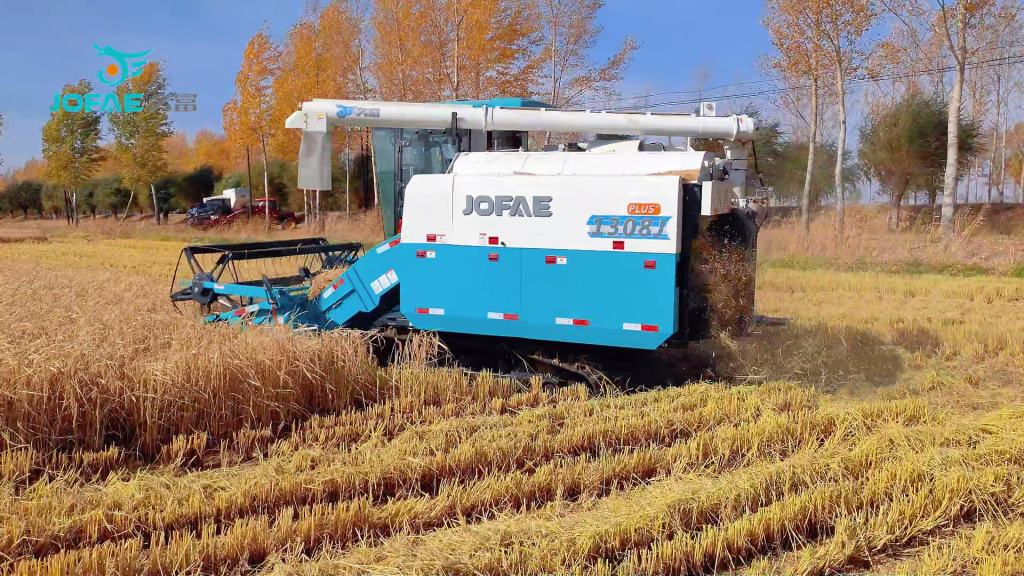
Picture this: you’ve spent years building up your grain operation, and the time has finally come to put a combine harvester on your farm. You start browsing listings and talking to dealers; the pricing numbers you get back are all over the map. One machine is listed at $40,000. Another looks nearly identical and carries a $200,000 price tag. A brand-new model from a major dealer clocks in at over $800,000. And suddenly the question “how much does a combine harvester cost” starts to feel a lot more layered than you expected.
Here’s the good news: the wide price range for combine harvesters actually makes complete sense once you understand what’s driving it. In this guide, we’ll walk you through everything that shapes the cost of a combine harvester—from machine size and technology to brand, region, and everything in between.
How Much Does a Combine Harvester Cost? The Price Spectrum at a Glance
Before we dive into the factors that shape how much a combine harvester costs, it helps to have a general sense of the pricing landscape. Combine harvester costs come in a pretty massive price range: from around $10,000 for an older, smaller used machine all the way up to over $1,000,000 or more for a fully loaded new flagship model.
Most late-model used combines trade somewhere in the $100,000 to $400,000 range, depending on age, hours, and condition. If you’re wondering how much a new combine harvester costs specifically, expect to start somewhere around $200,000 to $300,000 for an entry-level new model, with mid-range and high-capacity machines climbing from there. At the top of the market, premium new models from major combine harvester manufacturers can comfortably exceed $500,000 to $700,000 fully configured.
Those pricing numbers represent the full spectrum of what’s available. How much a combine harvester costs for your specific operation depends on your acres, your crops, and what you actually need the machine to do.
Key Factors That Determine How Much a Combine Harvester Costs
Understanding those wide combine harvester price ranges starts with understanding what you’re paying for in the first place. Several key variables drive combine harvester costs up or down, and knowing them helps you compare machines intelligently and find the best fit for your budget.
Machine Size and Harvesting Capacity
Machine size is one of the most direct drivers of combine harvester price. Combines are built in different harvesting classes, and each step up the class ladder brings more processing capacity, more engine power, a larger grain tank, and faster throughput.
For a smaller or mid-sized farming operation, a lower-class combine harvester will do everything you need at a price that fits comfortably within your budget. For large-scale operations harvesting thousands of acres in tight weather windows, a higher-class combine harvester is a better fit for the job, and its cost reflects that capability. The practical takeaway: match the machine to your acres.
Technology and Features
Modern combines are packed with technology that can significantly drive up the price. GPS navigation, real-time yield and moisture monitoring, automated steering (AutoTrac), precision agriculture integration, and advanced data analytics systems all add to the cost.
For example, John Deere’s Combine Advisor and Operations Center are deeply integrated into their newer models. New Holland’s Intellisense and Intellisteer systems add functionality—and cost. These features can improve efficiency and reduce operator workload, but they come at a premium.
New vs. Used
The how much is a new combine harvester question has a very different answer than the used market question. New combines offer the latest technology, precision farming compatibility, and warranties, but they come at a much higher price point. Used combine harvesters provide excellent value, especially when sourced through transparent auction marketplaces. Well-maintained models can perform at a high level for years, and depreciation on heavy equipment often means significant savings.
Brand and Model
Different manufacturers command different price points. The “big three”—John Deere, Case IH, and New Holland—dominate the market, with each offering a range of models from entry-level to flagship. Other manufacturers like Claas, Fendt, and Deutz-Fahr also produce combines recognized for engineering quality and innovative features.
How Much Does a Combine Harvester Cost by Brand?
Brand is one of the biggest price factors. Here’s a breakdown of major models and their current market prices.
John Deere Combine Harvester Prices
John Deere is one of the most recognizable names in the combine market. A 2025 John Deere S7 700—a mid-to-high-capacity model—is priced at approximately $540,900. A 2025 John Deere S7 700 with some hours on it can be found for around $528,110.
On the used side, a John Deere S690i with 2,525 engine hours and a 12m 640X header was recently listed at £88,950 (reduced from £95,300), demonstrating the significant discount available in the used market.
At the very top of the John Deere lineup, the flagship X9 1100—when it arrives on farm—can cost north of £600,000.
Case IH Combine Harvester Prices
Case IH’s Axial-Flow series is a popular choice among farmers. A 2025 Case IH AF9260—a Class 9 combine built for maximum throughput—lists at $942,500 for a new unit. Used AF9260 models can be found at significantly lower prices, with one 2025 used unit listed at $536,000.
Case IH also offers various incentives. For example, qualified buyers could access up to $25,000 in Titan incentives on select models when purchased before specific deadlines-. Additionally, Case IH has been offering 0% interest loans on parts and services with a minimum 15% deposit.
New Holland Combine Harvester Prices
New Holland has edged ahead in the perpetual race for grain harvesting supremacy with its highest output combines. The New Holland CR9.90 is one of the world’s most powerful combine harvesters. A 2025 New Holland CR9.90Z was listed at $925,000 CAD. A 2021 CR9.90Z used model was priced at $745,000 CAD.
For European buyers, a 2015 New Holland CR9.90 smart Trax was available at €220,000 (excluding VAT).
Other Brands
Claas has a strong reputation, particularly in European markets, with models that deliver excellent grain quality. A used Claas Lexion 520 with a 6m/20′ header was listed at £56,500 + VAT in the UK-. A low-hour Claas Lexion 7700 TT (405 hours, 2023 model) was priced at €479,000.
Deutz-Fahr has also been active in the market, running pre-season promotions that include headers, turnip tables, and straw cutters in the package price.
How Much Does a Combine Harvester Cost in Different Markets?
Combine prices are not global. Here’s what they cost in the UK, India, US, and other regions.
How Much Does a Combine Harvester Cost in the UK?
The UK market for combine harvesters commands premium prices. A new flagship model like the John Deere X9 1100 can arrive on farm north of £600,000. Even used models command six-figure sums—the John Deere S690i referenced earlier was priced at £88,950 plus VAT with over 2,500 engine hours.
Massey Ferguson has introduced “Next Edition” combine ranges with customer benefits of up to £5,000 for MF Activa S and MF Beta models, and up to £13,000 for the MF Ideal-. These kinds of promotions can make a meaningful difference on a six-figure purchase.
How Much Does a Combine Harvester Cost in India?
The Indian market offers a dramatically different pricing structure, with a wide range of options suited to different farm sizes and budgets. How much does a combine harvester cost in India? In 2026, harvester prices range from around ₹5 lakh for tractor-mounted mini combines to over ₹1.5 crore for advanced self-propelled machines.
Here are some specific 2026 Indian market prices:
| Model | Power (HP) | Price in India (₹ Lakh) | Approx. USD |
| Gahir Nippy-45 | 45 HP | ₹5.25 Lakh | ~$5,500 |
| Dasmesh 912 | 55-75 HP | ₹8.40 Lakh | ~$8,800 |
| Dasmesh 913 | 55-75 HP | ₹9.75 Lakh | ~$10,200 |
| Kartar 3500 W | 76 HP | ₹18.70 Lakh | ~$19,700 |
| JOFAE JF100G | 100 HP | ~₹19.00 Lakh | ~$20,000 |
| Dasmesh 726 | 76 HP | ₹22.50 Lakh | ~$23,700 |
| Dasmesh 9100 | 101 HP | ₹23.50 Lakh | ~$24,700 |
| Malkit 997 – Deluxe | 101 HP | ₹26.40 Lakh | ~$27,800 |
| Kartar 4000 Maize | 101 HP | ₹27.50 Lakh | ~$28,900 |
| Gahir SPLENZO-75 | 101 HP | ₹34.00 Lakh | ~$35,700 |
(Prices are approximate and subject to change)*
For standard combines, prices typically fall in the ₹18 to ₹35 lakh range, while premium machines range from ₹40 to ₹85 lakh. Specialised harvesters can cost ₹25 lakh to over ₹1.5 crore. It’s worth noting that government schemes such as PM KISAN SMAM provide subsidies of 40 to 50 percent on harvester purchases in India, with higher support for certain categories of farmers.
How Much Does a Combine Harvester Cost in the US?
The US market represents the upper end of the pricing spectrum. A 2025 John Deere S7 700 lists at $540,900. A new 2025 Case IH AF9260 comes in at $942,500. A 2025 New Holland CR9.90Z was listed at $925,000 CAD (approximately $675,000 USD).
At auction, prices can vary widely. A 2000 John Deere 9650 STS sold at auction for $19,250 in January 2026. A used Case IH 2388 was listed at €25,000 (excluding VAT).
How Much Does a Combine Harvester Cost in Other Regions?
In Africa, larger Full-feed Combine Harvester units with 1,000-liter grain tanks cost between $300,000 and $500,000. Smaller units can be hired at $56-63 per hectare. A mini rice combine harvester can be purchased at an investment cost of as little as $5,000.
In Europe, the used market offers a range of options. A New Holland CX5.90 used model was listed at €199,000 (excluding VAT). A used John Deere W660 was priced at €187,000 (excluding VAT).
How Much Does a Mini Combine Harvester Cost?
For smaller operations or specific crop types, mini combines offer an accessible entry point. In India, mini combine harvester prices start from as low as ₹4.00 lakh and go up to ₹31.00 lakh. A Gahir Nippy-45 mini combine is priced at ₹5.25 Lakh. A Dasmesh 3100 Mini Combine Harvester is available at ₹18.50 Lakh.
At the global level, a mini rice combine harvester can be purchased for an investment cost of $5,000, making it profitable after approximately 342 hours of machine use—equivalent to about 133 hectares of paddy field.
Beyond the Sticker Price: What Else Should You Budget For?
The purchase price is just the beginning. Here are the additional costs you need to budget for:
Headers (Cutting Platforms): Headers are often sold separately from the combine itself. A header for a flagship model can cost as much as £220,000 on top of the machine price. A wide-span 50ft (15.24m) cutterbar typically commands a premium of £5,000-£7,000 over a 45ft version.
Transport and Delivery: A combine header is 30 to 40 feet across and detaches to travel on its own trailer. The header travels separately from the combine body, meaning it’s two separate loads. This doubles transport costs.
Import Duties and Taxes: Tariffs may apply depending on the country of origin-. In the UK, for example, VAT is added to the purchase price (the John Deere S690i at £88,950 is listed “plus VAT”).
Operating Costs: Fuel, maintenance, repairs, and labor all add to the total cost of ownership. Harvesting costs vary depending on factors such as header width, combine size, and the number of acres harvested annually-. The average harvesting cost is approximately $31 per acre when looking solely at combine costs.
Depreciation: Heavy equipment depreciates, though well-maintained combines can hold their value. A used 2025 John Deere S7 700 with some hours drops from $540,900 new to around $528,110-—relatively modest depreciation for the first hours of use.
How Much Does a Combine Harvester Cost? Final Thoughts
The answer spans a breathtaking range: from $10,000 for an older used machine to over $1,000,000 for a fully loaded flagship model. Entry-level new combines start around $200,000–$300,000, while late-model used units typically trade in the $100,000–$400,000 range.
Ultimately, the right price depends on your acres, crop types, and technology needs. For buyers on a tighter budget, well-maintained used machines offer excellent value. The Indian market—featuring models like the JOFAE JF100G at roughly $20,000—also demonstrates that solid performance can be found at lower price points without sacrificing core capability.
Key takeaway: don’t just buy the machine—buy the right machine for your farm. Match the combine to your operation, factor in headers, transport, and operating costs. A well-chosen combine isn’t an expense—it’s an investment in every harvest to come.