
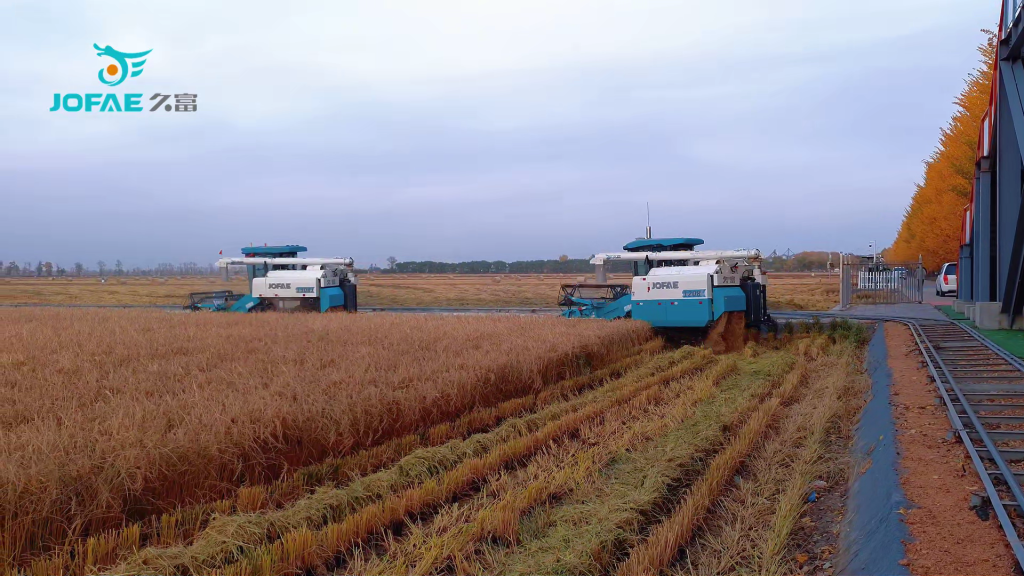
Picture this: a vast golden wheat field stretches to the horizon. A single machine rolls steadily across the landscape, its front end “swallowing” standing crops while its rear ejects finely chopped straw—and inside, clean grain accumulates in the grain tank. This is the magic of modern agriculture. But what does a combine harvester do exactly?At its most fundamental level, a combine harvester—often simply called a “combine”—is a machine that performs multiple harvesting operations in a single pass-. It combines reaping, threshing, gathering, and winnowing into one continuous process-. In other words, what does a combine harvester do? It takes standing crops from the field and delivers clean grain ready for storage, all in one seamless operation.
The Core Answer: What Does a Combine Harvester Do in Simple Terms
So, what does a combine harvester do in plain language? Imagine if you had to harvest a field by hand: you would need to cut the crop, gather it, beat the grain loose from the heads, separate the grain from the chaff, and finally collect the clean grain. That’s five or more separate, backbreaking steps.
What does a combine harvester do instead? It does all of these jobs at the same time. A combine harvester is essentially a mobile processing factory that rolls through the field-. It cuts the crop, feeds it into the machine, threshes (beats) the grain loose, separates the grain from the straw and chaff, cleans the grain, and stores it in an onboard grain tank—all while moving forward-. The straw and other crop residues are either chopped and spread back onto the field or collected separately-.
In short, what does a combine harvester do? It transforms standing crops into clean grain in a single pass, eliminating the need for multiple separate machines and countless hours of manual labor-.
Step by Step: What Does a Combine Harvester Do During Operation
To truly understand what does a combine harvester do, it helps to follow the crop’s journey through the machine. Each stage answers a different part of the question: what does a combine harvester do at each step of the process?
1. Cutting and Gathering (The Header)
The header—the wide attachment at the front of the machine—is where the harvesting begins. As the combine moves forward, the reel (a rotating wheel with tines) gently sweeps the standing crop toward the cutter bar-. The cutter bar slices through the crop stems near ground level-. Then, an auger (a large screw-like conveyor) gathers the cut crop from across the full width of the header and funnels it into the center, feeding it into the machine’s throat-. So, what does a combine harvester do first? It cuts and gathers the standing crop.
2. Feeding and Conveying
Once the crop enters the throat, a feeder house—essentially a conveyor system—transports the crop material upward and into the heart of the machine: the threshing mechanism-. This ensures a steady, even flow of material into the threshing rotor. Here, what does a combine harvester do is simply move the crop along to the next stage.
3. Threshing (Separating Grain from Heads)
This is where the real action happens. The crop material enters a threshing rotor that rotates at high speed within a perforated housing fitted with adjustable concaves-. As the rotor spins, it beats and rubs the crop, literally pounding the grain kernels loose from the seed heads-. The grain falls through the perforations in the concave, while the larger straw and material continue moving through the rotor. This is arguably the most critical answer to what does a combine harvester do—it threshes the crop to separate the grain.
4. Separation
Not all grain falls through the concave on the first pass. Additional separation occurs as the material continues through the rotor and across separating grates. These allow any remaining grain to shake loose and fall through, while the straw—now largely grain-free—continues toward the rear of the machine. So what does a combine harvester do here? It ensures that as little grain as possible is lost with the straw.
5. Cleaning (Winnowing)
Now the grain is mixed with chaff, dust, and other light debris. The cleaning system tackles this with two components: a fan that blows a stream of air upward through the falling grain, and a set of vibrating sieves that shake the mixture-. The air blows the lighter chaff and dust out the back of the machine, while the sieves allow clean grain to fall through while capturing any remaining larger debris-. This answers another key part of what does a combine harvester do—it cleans the grain.
6. Grain Collection and Straw Disposal
The clean grain drops into an auger that carries it to the grain tank (also called the grain bin) onboard the machine. When the tank is full, the combine can unload the grain into a truck or grain cart via an unloading auger—all without stopping-. Meanwhile, the straw and chaff that have been separated from the grain are either chopped into small pieces and spread evenly across the field (returning nutrients to the soil) or dropped in a windrow for baling later-.
So, to fully answer what does a combine harvester do in operation: it cuts, gathers, feeds, threshes, separates, cleans, collects grain, and disposes of straw—all in one continuous, efficient process.
What Is a Combine Harvester Used For?
Now that we’ve covered what does a combine harvester do, let’s address a closely related question: what is a combine harvester used for? The answer is both broad and specific.
What is a combine harvester used for? It is used primarily for harvesting cereal grain crops including wheat, barley, corn (maize), oats, rice, rye, and sorghum-. But it doesn’t stop there—combines are also used for non-grain crops such as flax, rapeseed (canola), soybeans, and sunflower seeds-.
What is a combine harvester used for in practical terms? It allows farmers to harvest hundreds of acres in a single day—something that would take dozens or even hundreds of workers weeks to accomplish by hand-. A modern large combine can harvest up to 30 acres per hour in wheat, dramatically reducing the time between crop maturity and harvest. This speed is critical because it allows farmers to harvest at the optimal time, minimizing losses from weather, pests, or over-ripening.
What is a combine harvester used for beyond just harvesting? It’s also a tool for farm efficiency and profitability. By combining multiple operations into one, it reduces fuel consumption per acre compared to using separate machines for each step, lowers labor costs, and allows farms to scale up production-. In regions facing labor shortages, the combine harvester is indispensable.
Different Types: What Does a Combine Harvester Do Across Varieties
Not all combines are the same. What does a combine harvester do can vary slightly depending on its type and configuration. Understanding the different types helps clarify what does a combine harvester do in different farming contexts.
By Power and Mobility
Self-propelled combines have their own engine and drive system-. They are the most common type in large-scale farming, accounting for about 61.6% of the global market. So what does a combine harvester do when it’s self-propelled? It operates independently, with the operator controlling speed, steering, and all harvesting functions from the cab.
Tractor-pulled combines (also called PTO-powered combines) are towed by a tractor and powered through the tractor’s power take-off (PTO) system. What does a combine harvester do in this configuration? It performs the same harvesting functions but relies on an external tractor for both power and mobility-. These are more affordable and are often used by smaller farms or as an entry point into mechanized harvesting.
By Movement
Wheel-type combines are the standard for dry, firm fields. Crawler-type (track) combines use tracks instead of wheels, providing better flotation and traction in wet or soft conditions.
By Feeding Method
Full-feed combines take the entire crop plant into the threshing mechanism. Half-feed (semi-feed) combines only take the grain heads into the machine, leaving the straw standing in the field-. What does a combine harvester do differently in each case? Full-feed combines handle a wider range of crops and conditions, while half-feed combines are often preferred for rice and other crops where straw preservation is important.
So, regardless of type, what does a combine harvester do remains the same at its core—but the specific configuration affects cost, mobility, and suitability for different crops and field conditions.
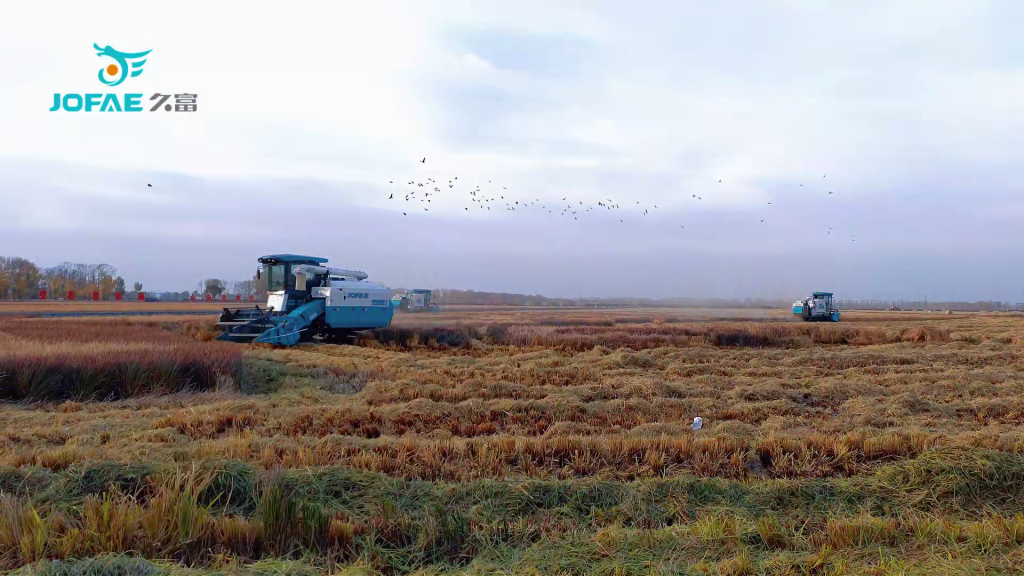
Why It Matters: What Does a Combine Harvester Do for Agriculture
Beyond the mechanical answer, what does a combine harvester do for agriculture as a whole? This is where we see the true significance of this remarkable machine.
What does a combine harvester do for farm labor? It replaces dozens or even hundreds of manual workers-. Before the combine, harvest required armies of laborers with sickles, followed by separate threshing and winnowing operations. Today, a single operator in a combine can harvest more in an hour than a team of workers could in days.
What does a combine harvester do for crop quality and food security? By harvesting quickly at the optimal time, it reduces losses from weather damage, shattering (grain falling from over-ripe heads), and pest attacks-. Modern combines are engineered to keep total grain loss below 1.2% for wheat and 3.0% for rice. Without this efficiency, global grain production would be significantly lower.
What does a combine harvester do for farm economics? It dramatically reduces the cost per bushel of harvested grain-. A single large combine can pay for itself in just a few seasons through labor savings and reduced grain loss. It also allows farmers to expand their operations—a farmer with a combine can manage far more acres than one relying on manual harvest.
What does a combine harvester do for sustainability? By chopping and spreading straw back onto the field, it returns nutrients and organic matter to the soil, reducing the need for synthetic fertilizers-. Modern combines also feature improved fuel efficiency—some models can run 14 hours without refueling.
In short, what does a Combine Harvester do for agriculture? It transforms farming from a labor-intensive struggle into a productive, efficient, and scalable industry that feeds the world.
A Brief History: How the Combine Harvester Came to Be
The story of the combine harvester is one of continuous innovation. While we’ve focused on what does a combine harvester do today, understanding its origins adds appreciation for this incredible machine.
The first combine harvester was invented in the United States by Hiram Moore, who patented his design in 1834. Early versions were pulled by horse or mule teams. By 1839, Moore’s machine had harvested over 50 acres of crops-. In 1836, another early primitive combine—a horse-drawn “combination harvester-thresher”—was introduced in Michigan-.
The first commercial combine harvester was developed in 1882 by Australian inventor Hugh Victor McKay-. This marked the beginning of the combine’s journey from experimental curiosity to commercial reality.
A major breakthrough came in 1938 when Massey-Harris introduced the MH-20, the world’s first self-propelled combine harvester-. For the first time, the harvester had its own engine and drive system, separating it from the tractor that previously towed and powered it-. This innovation provided huge gains in productivity and performance.
Since then, combines have continued to evolve: larger grain tanks, more powerful engines, better cleaning systems, GPS guidance, yield monitoring, and automated controls. Today’s combine is a high-tech marvel—but at its heart, what does a combine harvester do remains the same as it did in 1834: it harvests, threshes, and cleans grain in one pass.
Operation and Maintenance Tips
To keep a combine performing at its best—and to ensure that what does a combine harvester do is done efficiently—proper operation and maintenance are essential.
Pre-Season Preparation
Before the harvest season begins, conduct a thorough inspection:
- Clean the machine thoroughly—use compressed air, brushes, and an industrial vacuum to remove straw, chaff, soil, and dust
- Check the feeder chain for proper tension and wear
- Inspect rasp bars and concaves for wear
- Check all bearings for proper lubrication and wear—if it spins on the combine, there are bearings that need attention
- Calibrate the machine according to the owner’s manual-
During Harvest
- Clean debris daily—accumulated crop residue can cause overheating and increase fire risk-
- Monitor air and fuel filters regularly—clean or replace as needed-
- Keep fire extinguishers readily available in the cab and mounted on the combine-
- Inspect the hydraulic system for leaks
Post-Harvest Storage
- Give the combine a final thorough cleaning before storage
- Lubricate all moving parts to prevent rust
- Store in a dry, covered location to protect from the elements
Proper maintenance ensures that what does a combine harvester do remains consistent season after season, minimizing costly downtime during the critical harvest window-.
Conclusion
So, what does a combine harvester do? It harvests, threshes, and cleans grain in a single pass—saving labor, reducing losses, and feeding the world. From horse-drawn origins to today’s high-tech giants, its core mission remains unchanged. At JOFAE, we are proud to support modern agriculture with reliable, innovative harvesting equipment that helps farmers get the job done efficiently. Next time you see a combine at work, you’ll know exactly what it does—and why it matters.