
If you have been asking yourself “what is the price of a combine harvester?” you have likely discovered that the answer is anything but straightforward. One listing shows a machine at $40,000. Another looks nearly identical but carries a $200,000 price tag. A brand-new model from a major dealer can clock in at over $800,000. Suddenly, the question what is the price of a combine harvester feels far more layered than expected.
The good news is that this wide price range makes complete sense once you understand what is driving it. Combine harvester pricing reflects everything from machine size and crop capacity to technology level, age, and condition. A compact used unit suited to a few hundred acres is a completely different machine than a high-capacity rotary harvester designed to cover thousands of acres. The gap in price reflects the gap in capability, which means there is a machine at the right price for nearly every farming operation.
In this guide, we will walk you through everything that shapes the cost of a combine harvester—from the factors that determine what is the price of a combine harvester for your specific operation, to the costs you will need to budget for beyond the sticker price, and finally the lease versus buy decision.
The Complete Price Spectrum—What Is the Price of a Combine Harvester in 2026?
Before diving into the factors that shape what is the price of a combine harvester for your farm, it helps to understand the full pricing landscape.
Combine harvester costs span a massive range: from around $10,000 for an older, smaller used machine all the way up to over $1,000,000 for a fully loaded new flagship model.
Price ranges at a glance:
| Category | Price Range |
| Older, smaller used machines | From $10,000 |
| Most late-model used combines | $100,000 – $400,000 |
| New entry-level models | $200,000 – $300,000 |
| New mid-range models | $300,000 – $500,000 |
| Premium new models (fully configured) | $500,000 – $700,000 |
| Top-end flagship new models | Up to $1,000,000+ |
In 2025, the global production of full-feed combine harvesters reached 91,020 units, with an average selling price of US$27,250 per unit. However, these averages mask the enormous variation between entry-level machines and high-capacity models. A new top-end combine harvester in the U.S. now lists for as much as $1 million—more than what most Americans will ever spend on a house. If you search John Deere’s top-end X9 combine on TractorHouse, you will find asking prices as high as $1 million.
So when you ask what is the price of a combine harvester, the honest answer is: anywhere from $10,000 to over $1,000,000. The right price for you depends entirely on your acres, your crops, and what you actually need the machine to do.
Six Factors That Determine What Is the Price of a Combine Harvester
Understanding those wide price ranges starts with understanding what you are paying for. Several key variables drive combine harvester costs up or down. Here are the six most important factors that determine what is the price of a combine harvester for any given machine.
1. Size and Harvesting Capacity
Machine size is one of the most direct drivers of combine harvester price. Combines are built in different harvesting classes, and each step up the class ladder brings more processing capacity, more engine power, a larger grain tank, and faster throughput. For a smaller farming operation, a lower-class combine will do everything you need at a price that fits comfortably within your budget. For large-scale operations harvesting thousands of acres in tight weather windows, a higher-class combine is a better fit, and its cost reflects that capability.
The practical takeaway: match the machine to your acres.
2. Brand and Model
Premium brands command premium prices. John Deere, Case IH, New Holland, and Claas dominate the market, and their top-end models carry the highest price tags. A late-model John Deere S780 with under 1,200 machine hours, for example, is running well above recent trend lines, with buyers willing to pay a premium for machines with life left in them.
3. Technology and Configuration
Modern combines are rolling computers. GPS navigation, yield mapping, auto-guidance, automatic machine adjustments, real-time telemetry, and remote diagnostics all add significant cost. These technologies can easily push a combine into a higher price bracket, but they also deliver efficiency gains that may justify the investment for larger operations.
4. Attachments and Headers
The sticker price of a combine rarely includes everything you need. Different crops require different headers—cereal cutter bars, rapeseed headers, corn headers, sunflower headers, and more. These attachments add thousands to the final cost. A 50ft header for the largest John Deere X9 1100 model, for instance, adds substantial cost to the base machine.
5. Tariffs and Supply Chain Costs
Tariffs and supply chain disruptions have pushed agricultural machinery prices higher. The Bureau of Labor Statistics’ producer price index for agricultural machinery hit a record 331.1 in July 2026, up about 37% from January 2020. These cost increases flow through to the final price farmers pay.
6. Market Supply and Demand
The combine market has experienced significant disruption over the past six years. After the pandemic disrupted supply chains in 2020, manufacturers increased production, leading to excessive inventories by 2024. Now, inventories are tightening again. Class 8 combine supply is down 16% year-over-year and sits 37% below the peak seen in August 2024. Used combine harvester inventory levels fell 3.29% month-over-month and 11.79% year-over-year in July 2026. At the same time, prices have begun to recover during 2026, suggesting that the excess supply is gradually being absorbed.
So what is the price of a combine harvester today? It is influenced not just by the machine itself, but by broader market forces that are pushing prices upward as supply tightens.
New vs. Used—Two Very Different Answers to What Is the Price of a Combine Harvester
When you ask what is the price of a combine harvester, the answer changes dramatically depending on whether you are looking at new or used equipment.
New combine harvesters offer the latest technology, lower failure rates, full warranties, and maximum productivity. But they come at a steep price. Entry-level new models start around $200,000 to $300,000, while premium new models can exceed $500,000 to $700,000 fully configured. At the very top, flagship models from major manufacturers now list for $1 million or more.
Used combine harvesters offer a much lower entry point. Most late-model used combines trade in the $100,000 to $400,000 range, depending on age, hours, and condition. A used John Deere X9 1100, for example, can be found in the $600,000 to $800,000 range—still expensive, but significantly less than the $1 million+ list price of a new unit. Even more affordable options exist: a used combine from the 1990s by Claas, New Holland, or John Deere can be had for well under $100,000.
The used market is currently tightening. Values for low-hour Class 8 combines in the 250-1,500 machine hour range were down about 9% year-over-year. However, in the 1,500-3,500 machine hour category, values ticked up almost 5% at auction. Meanwhile, actual sold retail values for that same range increased meaningfully.
If you are asking what is the price of a combine harvester that fits your budget, the used market offers compelling options—but be prepared to move quickly as inventories continue to decline.
Beyond the Sticker Price—The Total Cost of Ownership
Knowing what is the price of a combine harvester at purchase is only half the picture. The true cost of owning a combine extends far beyond the initial purchase price.
A complete total cost of ownership (TCO) analysis considers several factors over the life of the machine:
| Cost Component | What to Consider |
| Depreciation | New machines lose value fastest in the first few years |
| Fuel | Fuel consumption varies significantly by machine size and efficiency |
| Maintenance and repairs | Wear parts, concaves, belts, and routine service add up |
| Labor | Operator time and skill requirements |
| Insurance and storage | Protection and proper shelter for the machine |
A true economic analysis must consider all these factors, not just the purchase price. For a high-end combine, annual maintenance, repair, and parts replacement costs can easily exceed $20,000.
It is also worth noting that you do not necessarily have to own a combine at all. Custom combining services are an alternative that eliminates ownership costs entirely. The 2026 custom rate survey from Iowa State University puts the median charge for combining corn at $45 per acre and soybeans at $42 per acre. For smaller operations, this can be far more economical than asking what is the price of a combine harvester and making that purchase.
Should You Lease or Buy a Combine Harvester?
Once you have a clear answer to what is the price of a combine harvester, the next question is how to pay for it. With new combine harvesters costing between $300,000 and $800,000+, the investment rivals that of a luxury home in many areas.
Buying builds equity and can be more cost-effective over the long term. If you plan to keep the combine for many seasons and have strong liquidity, buying may make sense.
Leasing requires less upfront capital and protects working capital. A lease spreads equipment cost over time, keeps more liquidity inside the operation, and better matches payment burden to the machine’s productive life. Leasing can also help preserve working capital and align payments with harvest revenue.
Renting is another option for farmers who only need a combine during peak harvest periods. Rental rates typically range from $180 per hour or more.
| Consideration | Buying | Leasing |
| Upfront capital | High | Low |
| Equity building | Yes | No |
| Cash flow impact | Significant | Managed |
| Long-term cost | Generally lower | Generally higher |
| Technology access | Own what you buy | Upgrade more easily |
The right choice depends on your farm’s financial position, how many acres you harvest, and how long you plan to keep the machine. If you are still uncertain about what is the price of a combine harvester that works for your operation, start by calculating your total cost per acre for both ownership and leasing scenarios.
2026 Market Outlook—Is Now the Time to Buy?
Understanding what is the price of a combine harvester today also means understanding where the market is heading.
The U.S. combine market is gradually regaining balance after several years of major swings. Dealer inventories have fallen approximately 16% year-over-year and are now 30% to 40% below the peak reached in 2024. Prices have begun to recover during 2026, following several years of downward pressure.
Key 2026 market signals:
- Class 8 combine supply is down 16% year-over-year
- Used combine harvester inventory fell 11.79% year-over-year in July
- Asking values for used combines decreased modestly (0.55% month-over-month)
- The delta between retail list and sold prices tightened from 10% to 6.5% year-over-year
- Demand remains strong for good-condition Class 7 and Class 8 combines
The combination of declining inventories and recovering prices suggests that the window for bargain hunting may be closing. If you wait until next season, you may face higher prices or the same price for the same machine.
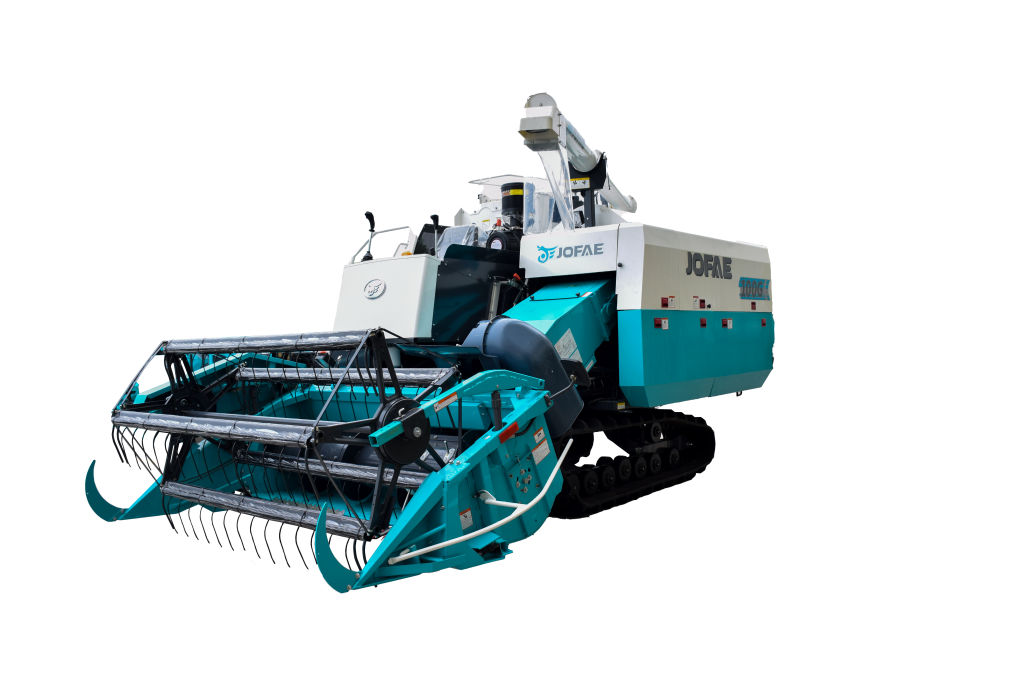
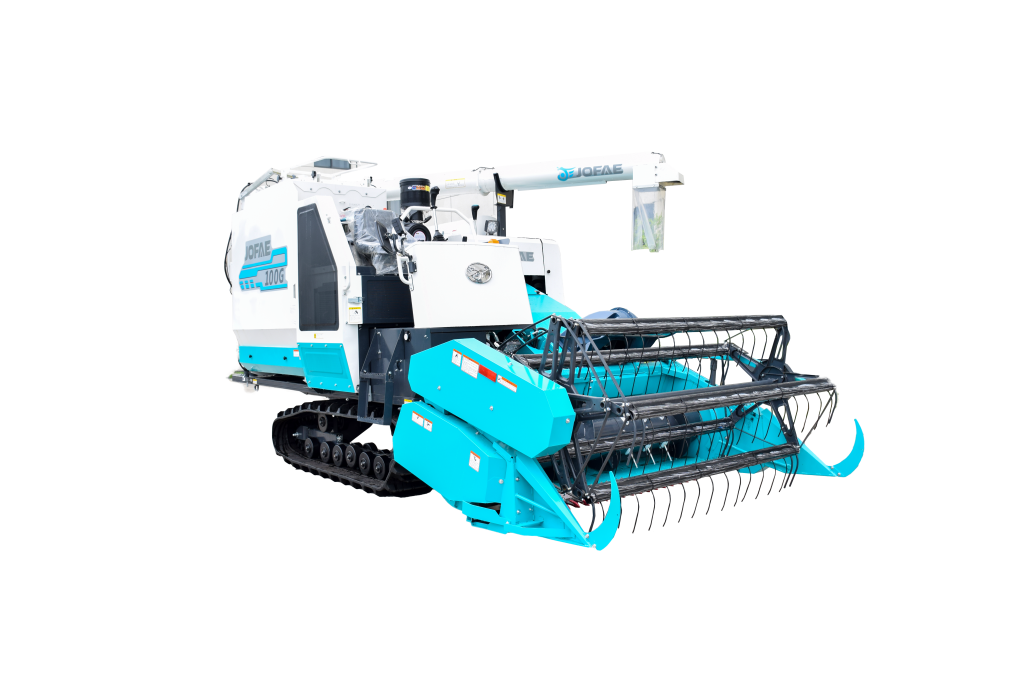
This is where considering options like the JF100G Full-feed Combine Harvester can be a strategic move. Full-feed combine harvesters represent a significant portion of the global market, with production reaching 91,020 units in 2025. The JF100G offers a compelling balance of capability and value for farmers who need reliable harvesting performance without the $1 million price tag of top-tier flagship models.
Finding the Right Price for Your Farm
So, what is the price of a combine harvester? The answer is not a single number but a range shaped by your specific needs, your budget, and the current market conditions.
Key takeaways:
- Prices range from $10,000 for older used machines to over $1,000,000 for new flagship models
- Size, brand, technology, attachments, market conditions, and supply chain costs all influence the final price
- New entry-level models start around $200,000–$300,000
- Most late-model used combines trade in the $100,000–$400,000 range
- Total cost of ownership includes depreciation, fuel, maintenance, labor, and insurance
- Leasing preserves working capital; buying builds equity
- The 2026 market is tightening, with inventories down and prices beginning to recover
Before you make a decision, calculate your total cost per acre for each option—new, used, lease, or custom hire. Match the machine to your acres, your crops, and your financial reality. And remember: what is the price of a combine harvester is ultimately a question only you can answer for your farm. But with the information in this guide, you are now equipped to ask the right questions and find the machine that delivers the best value for your operation.