
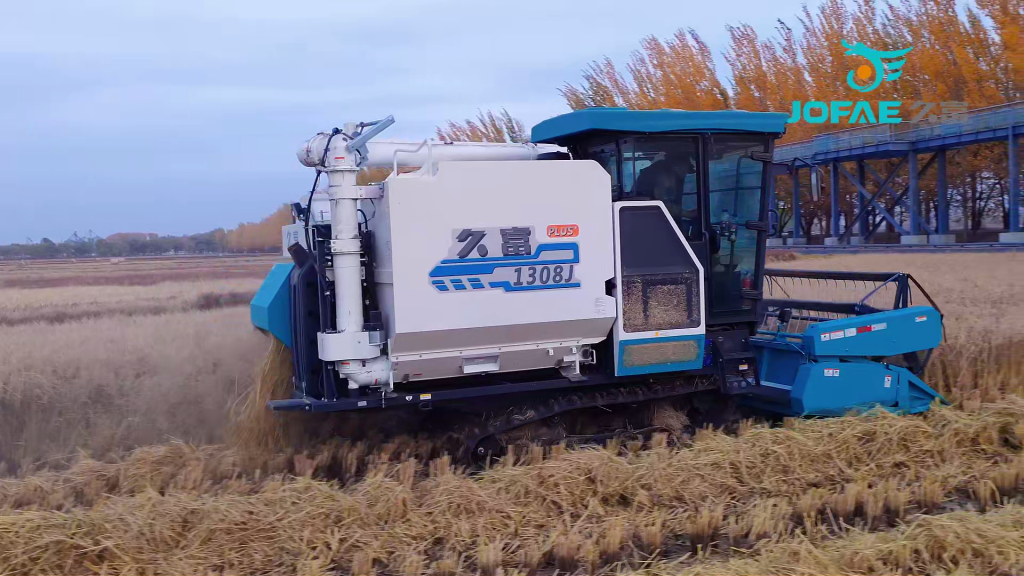
Picture this: you have spent years building up your grain operation, and the time has finally come to put a combine harvester on your farm. You start browsing listings, talking to dealers, and asking around—but the numbers you get back are all over the map. One machine is listed at $40,000. Another looks nearly identical and carries a $200,000 price tag. A brand-new flagship model clocks in at well over $800,000. Suddenly, the question how much to buy a combine harvester starts to feel a lot more complicated than you expected.
Here is the good news: the wide price range makes complete sense once you understand what is driving it. This guide walks you through everything that shapes the cost of a combine harvester, from machine size and brand to technology, age, and condition. By the time you finish reading, you will know exactly how to approach the market with confidence.
How Much to Buy a Combine Harvester: The Price Spectrum
Let us start with the direct answer to how much to buy a combine harvester. Combine harvester costs come in a massive range: from around $10,000 for an older, smaller used machine all the way up to over $1,000,000 or more for a fully loaded new flagship model. To give you a clearer picture:
| Category | Price Range |
| Older, smaller used machines | $10,000 – $40,000 |
| Late-model used combines | $100,000 – $400,000 |
| New entry-level models | $200,000 – $300,000 |
| New mid-range models | $500,000 – $700,000 |
| New flagship models | $700,000 – $1,000,000+ |
In 2026, combine harvesters are priced from approximately $102,000 to over $1,134,000, depending on brand, class, and configuration. The most expensive model on the market is the John Deere X9 1100, starting at around $1,133,625.
Factors That Impact How Much to Buy a Combine Harvester
To truly understand how much to buy a combine harvester, you need to look at what you are paying for. Several key variables drive costs up or down:
1. Machine Size and Harvesting Capacity
Combines are built in different harvesting classes, and each step up the class ladder brings more processing capacity, more engine power, a larger grain tank, and faster throughput. Models range from around 290 HP to over 780 HP. A smaller farm might only need a Class 7 machine, while large-scale operations harvesting thousands of acres require Class 9 or Class 10 models with significantly higher price tags.
2. Brand and Model
Brand reputation plays a major role in pricing. Major manufacturers like John Deere, Case IH, New Holland, and CLAAS command premium prices. For example, John Deere combines have an average market price of approximately $461,514, with individual units ranging from as low as $555 to as high as $1,432,800.
3. Technology and Features
Advanced technology pushes prices upward significantly. Features like GPS guidance, auto-guidance systems, yield mapping, automated crop flow adjustment, and camera systems add substantial cost. A 2026 Case IH 9260 with full automation package and 4WD, for instance, lists at $539,900.
4. Engine Power and Drivetrain
Higher horsepower means higher cost. New Holland’s CR series, for example, offers models with 460 to 600 HP, with prices ranging from approximately $117,000 for used units to over $619,000 for premium configurations.
5. Age and Hours
For used machines, engine hours and separator hours are the most critical pricing indicators. A five-to-ten-year-old machine with reasonable hours can be priced at roughly one-third of a new model—and still provide many years of useful life with proper care. Low-hour used Class 8 combines in the 250-1,500 machine hour range saw average values down about 9% year-over-year in mid-2026.
New vs. Used: Finding the Right Balance
When evaluating how much to buy a combine harvester, the new-versus-used decision is one of the most important choices you will make.
Buying New
A new combine gives you the latest technology, full warranty coverage, and zero operating hours. However, new machines depreciate significantly the moment they leave the lot. Entry-level new models start around $200,000 to $300,000, while mid-range and high-capacity machines climb from there. Fully configured premium models from major manufacturers can comfortably exceed $500,000 to $700,000.
Buying Used
The used market offers substantial savings. Most late-model used combines trade in the $100,000 to $400,000 range, depending on age, hours, and condition. However, the used market is tightening. In mid‑2026, used combine harvester inventory levels have been trending downward, with asking values seeing modest decreases while auction values remain relatively stable. Prices began recovering during 2026 as excess supply across the U.S. market has been gradually absorbed.
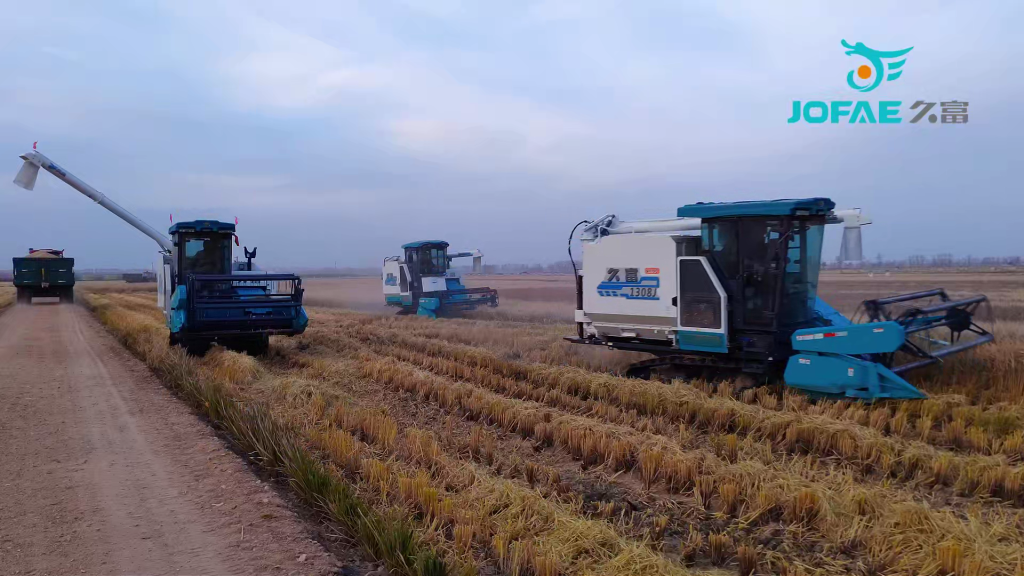
For farms with tighter budgets, a high-quality used machine often represents the best value. If you are looking for a reliable entry point, models like the JF100G Full-feed Combine Harvester offer a balanced combination of performance and affordability for mid-sized operations.
Brand-by-Brand Price Comparison
Understanding how much to buy a combine harvester from each major brand helps you compare options effectively.
John Deere
John Deere dominates the combine market with a wide range of models. The S Series (Class 7) starts around $705,931, while the X Series (Class 10) reaches $1,133,625. Used John Deere X9 1100 models have been listed between $707,971 and $1,200,000. Average market price for John Deere combines sits at approximately $461,514.
Case IH
The 2026 Case IH 9260 is priced at $539,900 with 275 separator hours. Used Case IH combines range widely, with some models listed around $457,000 to $470,000. In the European market, Case IH combine harvesters average around €294,682.
New Holland
New Holland offers both conventional and rotary models. The CX8 Series (Class 7) is priced around $766,803, while the CR Series Twin Rotor (Class 8-9) ranges from $862,159 to $894,872. The New Holland CR8.90 has an average market price of $390,118, with listings ranging from $117,335 to $619,051. Used New Holland CR7090 models have been seen from €36,706 to €147,062.
CLAAS
CLAAS commands premium pricing in the European and North American markets. A CLAAS Lexion 7700 TT with Vario 1080 header is listed at €415,000 plus VAT (approximately €493,850 gross). The CLAAS Lexion 750 is available around €89,900. Used CLAAS combines, such as the 8700TT, have been listed at over $916,000.
Beyond the Sticker Price: Hidden Costs
When calculating how much to buy a combine harvester, the purchase price is only the beginning. You must also budget for:
- Maintenance and repairs – Regular servicing, parts replacement, and unexpected breakdowns can add thousands annually
- Fuel costs – One of the largest ongoing operating expenses
- Depreciation – The single most important fixed cost factor over the machine’s life
- Insurance and taxes – Vary by location and machine value
- Storage – Proper shelter protects your investment
- Headers and attachments – Different crops require different headers, and these can add substantially to total cost
These ongoing costs can significantly impact the total cost of ownership, making it essential to look beyond the initial price tag.
Financing and Leasing Options
If the upfront how much to buy a combine harvester figure feels daunting, financing and leasing can help spread the cost:
- Agricultural loans – Typically require around 25% down payment with repayment terms up to 7 years
- Financing leases – Monthly payments allow you to use the machine without a large upfront investment
- Government-backed programs – Some programs offer reduced down payments and extended terms up to 10 years
- Seasonal ordering discounts – Many brands offer incentives for early or off-season orders
Exploring these options can make a higher-quality machine more accessible than you might think.
Final Thoughts: How Much to Buy a Combine Harvester for Your Farm
So, how much to buy a combine harvester for your specific operation? The answer depends on your acres, your crops, and what you actually need the machine to do. Here is a practical approach:
- Define your needs – Calculate your acreage, crop types, and harvesting windows to determine the class and capacity you require. Match the machine to your acres.
- Set a realistic total budget – Include the purchase price plus first-year operating costs, maintenance, and any necessary headers or attachments.
- Weigh new vs. used – New machines offer the latest technology and warranty; used machines provide better value for money. A five-to-ten-year-old machine with reasonable hours can be a third of new cost.
- Watch the market – With used combine inventories declining and prices beginning to recover, acting sooner rather than later may be advantageous.
- Compare financing options – Explore loans, leases, and seasonal discounts to make your purchase more manageable.
The question how much to buy a combine harvester has no single answer—but with the framework above, you can make a confident, informed decision that fits your farm’s needs and budget. Whether you choose a new flagship model, a well-maintained used machine, or a value-focused option like the JF100G Full-feed Combine Harvester, the right machine is out there at the right price for your operation.