
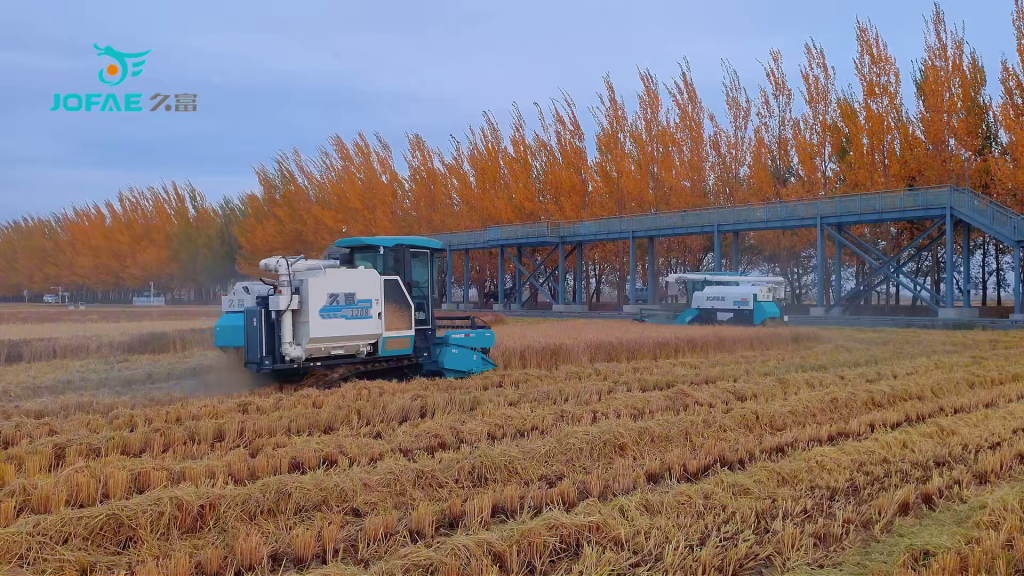
Corn is one of the most widely cultivated crops in the world, used for food processing, animal feed, and industrial raw materials. To meet the demand for efficiency and consistency in large-scale corn production, mechanized harvesting has become standard practice. But how does a corn harvester work? Understanding this question helps farmers and agricultural professionals better select, operate, and maintain harvesting equipment for optimal field performance.
A corn harvester—more accurately known as a corn combine harvester (often simply called a Combine Harvester) equipped with a specialized corn head—is a complex machine designed to perform several harvesting steps in one continuous operation: gathering the stalks, removing the ears, husking them, and cleaning the kernels. Combines got their name because they combine the functions of harvesting, threshing, and cleaning the kernels in a single pass.
What Is the Purpose of a Corn Harvester?
Before diving into how a corn harvester works, it’s worth understanding what it’s designed to accomplish. A corn harvester, also known as a corn combine harvester, is a piece of equipment used to harvest corn crops. By combining several functions into one machine, users can easily and efficiently harvest crops.
A modern corn combine can process about 200 acres of field corn each day. This is critically important, as corn needs to be harvested at a certain moisture content for proper storage. The machine performs the tasks of reaping, threshing, and winnowing in a single pass through the field.
Types of Corn Harvesters
There are two main types of corn harvesters:
Self-propelled harvesters have their own engine and are generally viewed as more efficient and easier to use. These are large, single-unit machines that harvest corn independently.
Pull-type harvesters are attached to a tractor or another piece of machinery and are towed through the field. While they are generally less expensive, their efficiency is lower and they can be more difficult to handle.
How Does a Corn Harvester Work? Step-by-Step Process
So, how does a corn combine harvester work in practice? The process begins at the front of the machine and continues through a coordinated series of mechanical systems that work together. Here’s a step-by-step breakdown:
Step 1: Gathering and Feeding
The process starts at the front of the machine with the header—a specialized corn head that is the front attachment initiating the entire operation. As the combine moves forward through the field:
- Pointed metal snouts (row dividers) guide the corn stalks into the head
- The snouts go in between the corn rows and separate each row evenly as they feed individual stalks into the machine
- Gathering chains grip the stalks and pull them down towards the cutter bar
- The cutter bar chops the stalks low to the ground
This stage is critical for maintaining a steady flow and preventing blockages that could reduce operational efficiency.
Step 2: Snapping (Ear Removal)
Once the stalks are drawn into the machine, the snapping process begins. Snapping rolls—often with intermeshing lobes—pull the stalks downward. Due to the difference in size between the ear and the stalk, the ears are snapped off. The stalks are then ejected back onto the field, while the ears alone are conveyed up into the body of the combine via an elevator.
Most of the stalk material is left in the field, which helps reduce the amount of non-grain material entering the machine. Leaving vegetative plant parts in the field also helps increase organic matter content in the soil and returns nutrients to the ground as the plant breaks down.
Step 3: Conveying
After snapping, the ears are transferred by chains or augers to the central conveying system. A stalk auger moves the stalks after they have been cut into the heart of the machine. The snapped ears are directed by augers to the threshing and separation system.
Step 4: Husking
Once inside the machine, the corn ears pass through husking rollers. These rollers remove the outer husks without damaging the kernels. The husks are expelled from the machine, while the cleaned ears move forward for further processing or collection.
Step 5: Threshing (Kernel Separation)
The threshing cylinder is where most of the action occurs. Unlike grain crops, corn ears require a gentler approach. They are typically fed into a dedicated corn cylinder or chamber, where the ears are rubbed against a concave metal grate.
The threshing cylinder rotates at a high rate of speed, removing the grain kernels from the ear. This action breaks the ears apart, separating the hard kernels from the cob. The kernels and smaller material fall through grates onto the cleaning system below. The larger, now empty cobs are expelled from the rear of the machine.
Some corn ears may make it through without the kernels being fully removed—these are recirculated back to the threshing cylinder via a “tailings elevator”.
Step 6: Cleaning and Separation
The mixture of kernels, bits of cob, husk, and dust that falls through the grates is shaken across a series of sieves or screens, often called the cleaning shoe. Various sieve levels vibrate, allowing the kernels to fall through while larger plant materials stay at the upper levels. This plant material is called “chaff”.
A fan blows a steady stream of air upward through these sieves. The lighter material—chaff and dust—is blown out the back of the combine, joining the stalk parts on the ground. The heavier kernels settle and are conveyed to a clean grain elevator.
Step 7: Storage and Unloading
The clean grain elevator carries the kernels to the onboard grain tank. A grain holding tank can hold over 400 bushels of corn before it needs to be emptied.
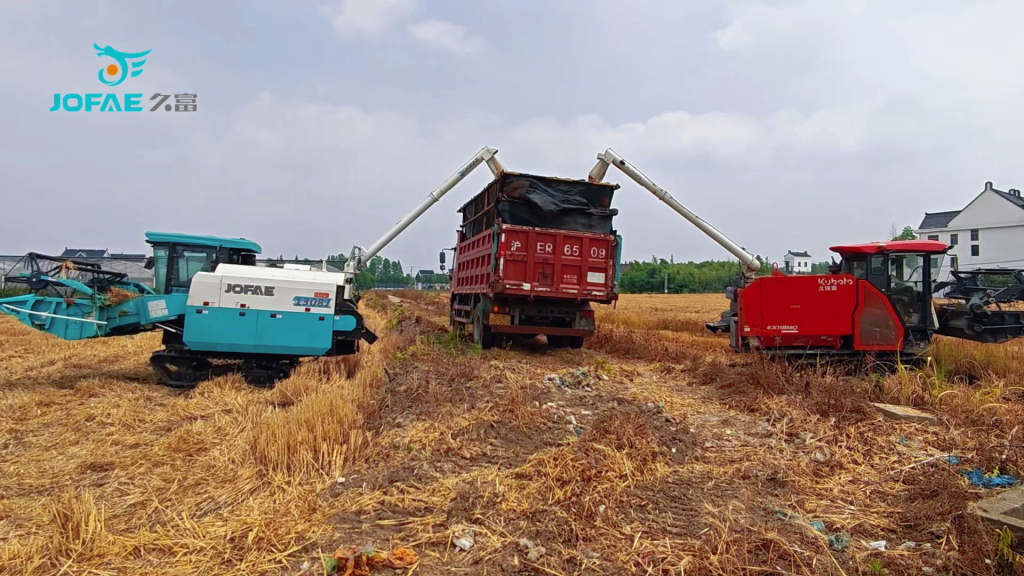
Once the grain tank is full, the combine operator unloads the kernels via an unloading auger into a waiting grain cart or truck driving alongside. In an efficient system, there’s always a grain cart with enough capacity ready to receive the corn so the combine can continue harvesting without interruption.
Step 8: Residue Management
Modern corn harvesters are designed to manage crop residue efficiently. Stalks and cobs may be chopped and spread evenly across the field. A straw spreader evenly distributes the residue. This process helps promote soil protection, contributes to soil organic matter, and eliminates the need for separate residue management operations. Proper residue management also facilitates easier soil preparation for the next planting season.
How Is Corn Harvested Step by Step? A Quick Summary
To summarize how is corn harvested step by step:
- Cutting – The header cuts cornstalks low to the ground
- Gathering – Stalks are guided and pulled into the machine
- Snapping – Ears are snapped off the stalks
- Husking – Outer husks are removed from the ears
- Threshing – Kernels are separated from the cobs
- Cleaning – Kernels are cleaned using sieves and airflow
- Storage – Clean kernels are stored in the grain tank
- Residue expulsion – Chaff and stalks are blown out the back
Operational Considerations
Field conditions such as plant height, moisture content, and row spacing influence how a corn harvester works. Operators must adjust header height, snapping roll speed, and ground speed to match crop conditions. Routine maintenance, including lubrication and inspection of wear parts, plays a key role in maintaining consistent harvesting results.
The entire process—from cutting the stalk to storing clean kernels—is a seamless, automated operation controlled from the combine’s cab. It allows a single machine and operator to harvest vast fields of corn with remarkable efficiency.