
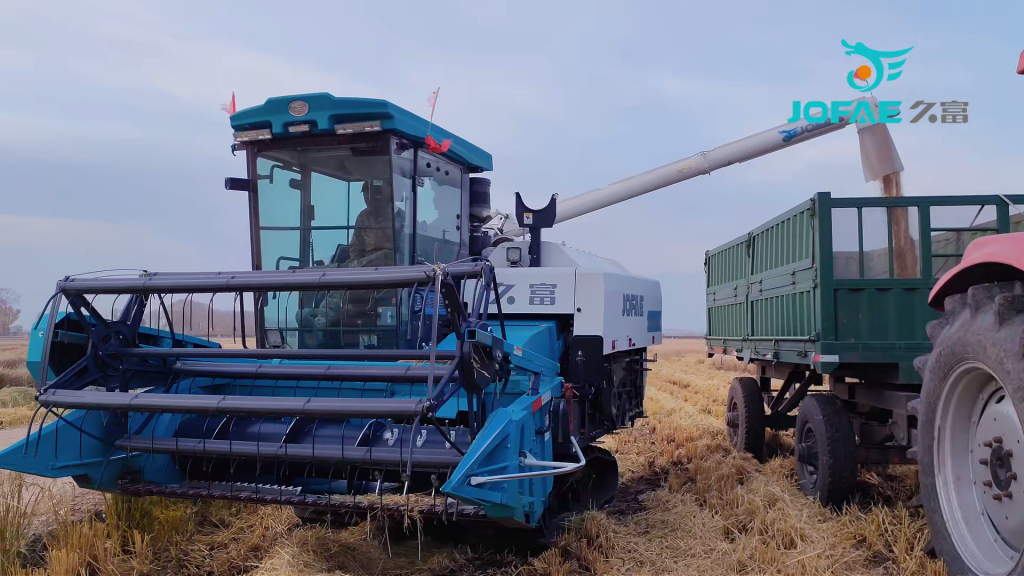
To fully understand what a combine harvester is used for, we need to start with a clear definition. A combine harvester—often simply called a “combine”—is a complex farm machine that both cuts and threshes grains and certain other crops. Its name comes from the fact that it “combines” three separate harvesting operations into one: reaping (cutting and collecting the crop), threshing (separating the edible grain from the inedible parts), and winnowing (removing the chaff from the grain).
The question what is a combine harvester used for can be answered at three levels:
- Reaping – cutting the crop from the field
- Threshing – loosening the grain from the stalks and husks
- Winnowing – separating the clean grain from the chaff and straw
By combining these tasks, the machine eliminates the need for multiple separate operations and dramatically reduces the labor required to bring in a harvest.
How a Combine Harvester Works – Step by Step
Understanding what a combine harvester is used for also means understanding how it accomplishes these tasks. A modern combine harvester works through a series of carefully coordinated stages:
1. Cutting (Header/Reaping)
As the combine moves forward across the field, the header at the front gathers the crop. A rotating pick-up reel draws the plants over sharp cutting blades, slicing them cleanly at the base.
2. Feeding
The cut crop is elevated into the body of the machine by a feeder mechanism, which delivers it to the threshing system.
3. Threshing
Inside the machine, a threshing cylinder or rotor spins rapidly against a concave surface. This action rubs the grain out of the seed heads, separating the valuable grain from the stalks and husks.
4. Separation
Some grain and chaff pass through to the straw deck, where the grain is shaken out and delivered to the cleaning system. Other grain goes directly to the cleaning shoe.
5. Cleaning (Winnowing)
Sieves and a powerful blast of air are used to separate the clean grain from the chaff. The lighter chaff is blown away, while the heavier grain drops through the sieves.
6. Collection and Storage
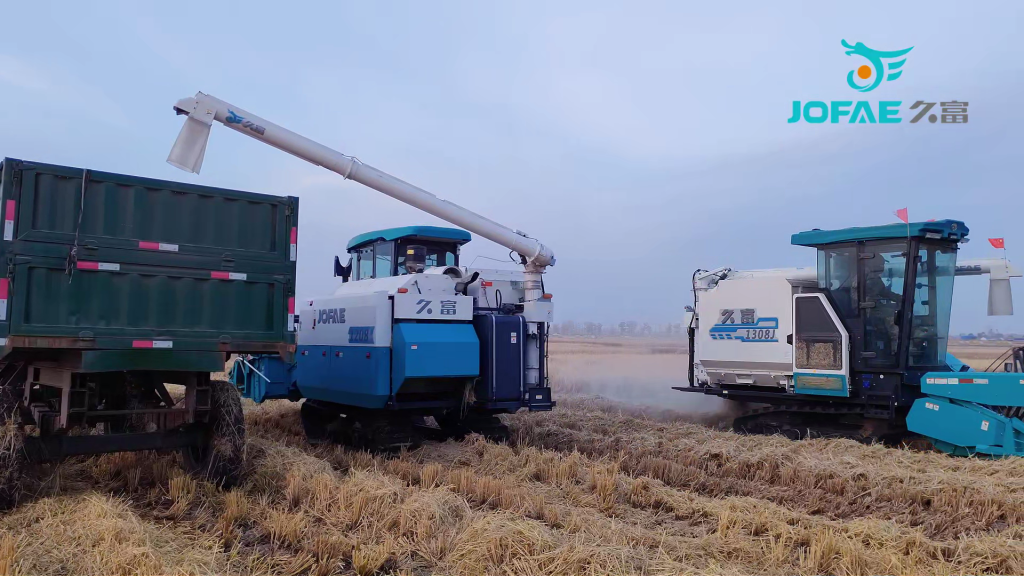
After passing through the air blast, the clean grain is conveyed by an auger to an elevator, which lifts it into a large storage tank on board the machine. When the tank is full, the grain is unloaded through a side pipe into a trailer that pulls up alongside.
7. Straw Disposal
The leftover straw drops out of the back of the combine, where it can be windrowed for baling or scattered over the ground by a spreader to return nutrients to the soil.
What Crops Does a Combine Harvester Harvest?
Another way to answer what is a combine harvester used for is to look at the wide variety of crops it can handle. Combines are primarily used for harvesting cereal grains, including:
- Wheat – the most common crop harvested by combines worldwide
- Barley – widely used for animal feed and malting
- Corn (maize) – a major grain crop in the Americas and beyond
- Oats – used for breakfast cereals and animal feed
- Rice – a staple food for much of the world’s population
- Rye – used for bread and whiskey production
- Sorghum – a drought-tolerant grain crop
Beyond these cereals, combines are also used for a number of non-grain crops:
- Soybeans – a major source of protein and oil
- Rapeseed (canola) – grown for cooking oil
- Sunflower seeds – used for oil and snacks
- Flax (linseed) – grown for fiber and oil
A Combine Harvester can be adapted to harvest different crops by simply changing the header (the front attachment). This versatility is one of the key reasons why what a combine harvester is used for extends far beyond just wheat—it is a true multi-crop machine.
The Core Advantages of Using a Combine Harvester
So what is a combine harvester used for in terms of benefits to farmers? The advantages are substantial:
1. Unmatched Efficiency
A combine does in minutes what would take dozens of workers days to accomplish. One machine can harvest hundreds of acres in a single day, dramatically reducing the time between crop maturity and harvest.
2. Labor Savings
Before combines, entire villages would turn out for harvest—reapers, rakers, binders, and threshers working in coordinated teams. Today, one skilled operator can do it all. This has fundamentally changed the economics and social structure of farming.
3. Reduced Grain Loss
Modern combines are precision machines. Their threshing and cleaning systems are designed to maximize grain recovery while minimizing damage to the kernels. Advanced combines can achieve grain savings that directly improve farm profitability.
4. Speed and Timeliness
Harvesting must happen within a narrow window—too early and the grain isn’t ripe; too late and the crop may be lost to weather or shattering. A combine allows farmers to harvest at the optimum moment.
5. Cost-Effectiveness
While a new combine is a significant investment (often £250,000 or more), the cost per acre of harvesting with a combine is far lower than the cost of manual labor. The economies of scale generated by mechanization have made modern agriculture possible.
A Brief History of the Combine Harvester
The question what is a combine harvester used for has been answered in progressively more sophisticated ways over the past two centuries. The combine harvester is a surprisingly old invention, first appearing over 180 years ago.
1826 – In Scotland, Reverend Patrick Bell designed a reaper machine that used scissors-type blades to cut crops. It was pushed by horses.
1834-1835 – In the United States, Hiram Moore built and patented the first true combine harvester—a machine capable of reaping, threshing, and winnowing grain. It was drawn by mules or horses.
1880s – The first California combines were built by Daniel Best’s company, with the Holt brothers following close behind.
1915 – International Harvester released the first tractor-pulled combine.
1930s – Tractor-drawn models became widely available, and combines began to be adopted on a large scale.
1938 – The first self-propelled combines appeared, capable of cutting swaths 8 to 18 feet wide.
1936 – Claas began producing combines in Europe and has since sold over half a million units.
Today’s combines bear little resemblance to those early horse-drawn machines. They are sophisticated, self-propelled vehicles that can weigh over 20 tons and cut swaths wider than 40 feet.
Modern Technology in Today’s Combines
The answer to what is a combine harvester used for today goes far beyond simple cutting and threshing. Modern combines are rolling data centers equipped with cutting-edge technology.
GPS Guidance and Auto-Steering
When a combine is equipped with GPS guidance, operators can run precision farming functions including guidance lines, mapping, and auto-steering. RTK-GNSS technology provides centimeter-level positioning accuracy of approximately 1–2 cm. This reduces redundant passes, saves fuel, and prevents skipped areas.
Yield Monitoring Sensors
Grain flow sensors and yield monitoring systems provide real-time data on how much grain is being harvested from each part of the field. This information can be used to generate yield maps that help farmers make better planting and fertilizer decisions for the following season.
ISOBUS Compatibility
Modern combines are equipped with ISOBUS (ISO 11783), a universal communication protocol that allows the machine to interface with different manufacturers’ displays and controllers. This standardization gives farmers more flexibility in choosing equipment.
Predictive Automation
Some of the latest combines feature Predictive Ground Speed Automation—the machine anticipates what’s coming in the field and automatically adjusts its speed for optimal performance.
Multi-Sensor Fusion
Advanced navigation systems combine GNSS with inertial measurement units (IMUs), visual SLAM, and LiDAR to maintain positioning accuracy even when satellite signals are temporarily lost. This ensures consistent, high-quality harvesting across challenging terrain.
Conclusion
So what is a combine harvester used for? The answer has evolved from a simple “cutting and threshing grain” to something far more comprehensive. Today, a combine harvester is used for harvesting a wide range of cereal and oilseed crops with unparalleled speed and efficiency, collecting real-time data that drives precision farming decisions, and doing all of this while dramatically reducing the labor required to feed the world.
From its humble beginnings as a horse-drawn contraption patented in 1834 to today’s GPS-guided, sensor-laden marvels of engineering, the combine harvester remains the undisputed king of the harvest field. It has transformed agriculture from a labor-intensive struggle into a highly efficient, technology-driven industry. Understanding what is a combine harvester used for is understanding the very foundation of modern food production—and appreciating one of the most important labor-saving inventions in human history.