
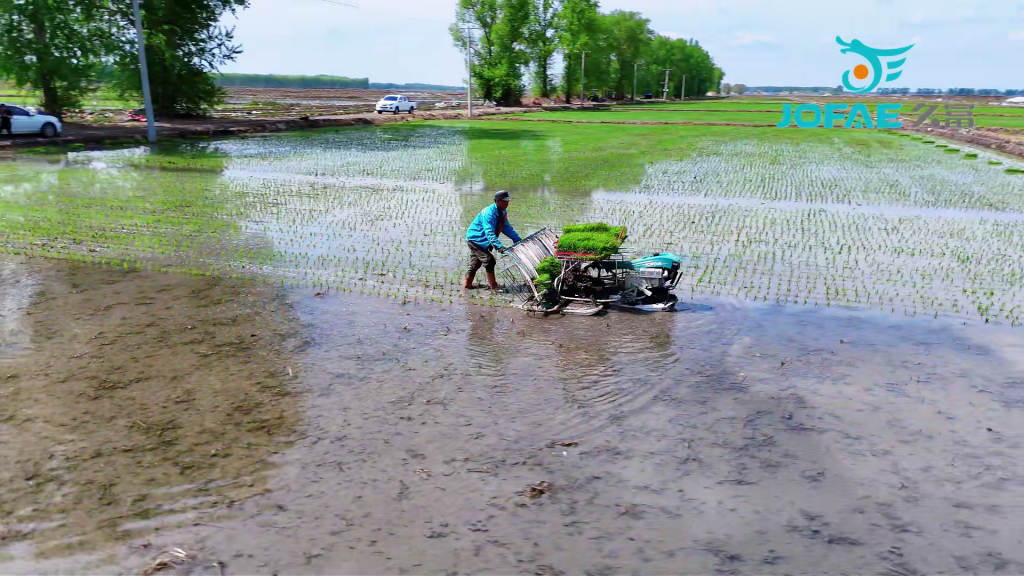
Buying your first rice transplanter is not just a purchase. It is a decision that affects your labor costs, your planting window, and your peace of mind for the next several seasons. For small-scale farmers, the wrong choice can mean a machine that sits idle, breaks down at the worst time, or simply does not fit the field. This guide walks you through the decision step by step, without repeating the same advice in every section.
Why Small-Scale Farmers Are Reconsidering Mechanized Transplanting in 2026
The economics of rice farming have shifted. Labor is scarcer, wages are higher, and the planting window is as short as ever. In many regions, hiring enough hands for manual transplanting is no longer reliable. A rice transplanter solves a specific problem: it moves seedlings into the field faster and with less dependence on seasonal workers. In 2026, entry-level machines are more accessible than before, and small farms are no longer excluded from mechanization. The question is no longer whether to mechanize, but which machine matches your scale.
Start With Your Farm, Not the Machine: 5 Self-Assessment Questions
Before you look at any rice transplanter, answer these five questions honestly.
- What is your total planting area? Under 2 hectares, a small walk-behind unit is usually enough. Above 5 hectares, you may need higher capacity.
- What is your field shape? Long, narrow, or terraced fields favor lightweight, maneuverable machines. Large rectangular fields favor faster models.
- What is your soil type? Sandy soils settle quickly; clay soils need more puddling time. This affects how well any transplanter can work.
- What is your water control like? You need a thin, consistent water layer. Poor water management will limit even the best machine.
- What is your budget and labor situation? If you cannot maintain a machine or find parts, a simpler model is safer.
Your answers will narrow the market before you ever compare specifications.
Key Specs That Actually Matter for a First-Time Buyer
Sales pages list many numbers. Most of them matter less than these seven:
- Number of rows: 2, 4, 6, or 8. More rows mean higher efficiency but also more weight and cost.
- Row spacing: Common spacing is 300 mm for rice. Check that it matches your local agronomic practice.
- Hill spacing: Adjustable spacing lets you match different varieties and field conditions.
- Planting depth: Usually 10–45 mm. Too deep and seedlings struggle; too shallow and they float.
- Weight: Lighter machines are easier to handle in soft soil and on slopes.
- Working efficiency: Measured in hectares per hour. Do not compare peak numbers; compare realistic field conditions.
- Power type: Manual, gasoline, or electric. Manual is cheapest and simplest; gasoline is faster; electric is quiet and low-maintenance but limited by battery life.
For a first rice transplanter, prioritize adjustability and ease of maintenance over maximum speed.
Where a 4 Row Manual Rice Transplanter Fits Best
A 4 row manual rice transplanter occupies a useful middle ground. It is more productive than a 2-row unit but far lighter and cheaper than a riding model. It suits small to medium fields, gentle slopes, and farms that want to reduce labor without committing to a large machine. For example, the F4 Walk-Behind Rice Transplanter is a typical entry-level option designed for exactly this profile: a farmer who needs reliable transplanting on a few hectares without a large capital outlay. If your fields are irregular or your budget is tight, this category deserves serious attention.
Buy, Rent, or Share? A Decision Framework
Do not assume buying is always right. Use this logic:
- Buy if you plant more than 2 hectares, rent is scarce during peak season, or you want to earn extra income by renting to neighbors.
- Rent if you plant less than 1 hectare, your planting window is flexible, or you are not ready to handle maintenance.
- Share if you and two or three neighbors have similar fields and can agree on a schedule. A shared rice transplanter lowers cost per farm but requires clear rules.
Renting has hidden costs: missed planting dates, unfamiliar machines, and no ability to plan ahead. Buying has hidden costs too: storage, parts, and your own time. Write down both sides for your farm before you decide.
What to Check Before You Pay: Dealer, Parts, and Warranty
Before you buy a rice transplanter machine, check these five things:
- Dealer reputation: Can you visit the dealer? Do they service what they sell?
- Parts availability: Ask for a parts list and typical delivery time. If common wear parts take weeks to arrive, the machine is a liability.
- Warranty terms: What is covered, for how long, and what voids it? Get it in writing.
- Training: Does the dealer offer a demonstration or first-use training? This reduces beginner errors.
- Used machines: If buying used, inspect the seedling tray, planting claws, transmission, and frame for cracks. Run it in wet soil if possible.
A good machine with a bad dealer is worse than a simple machine with local support.
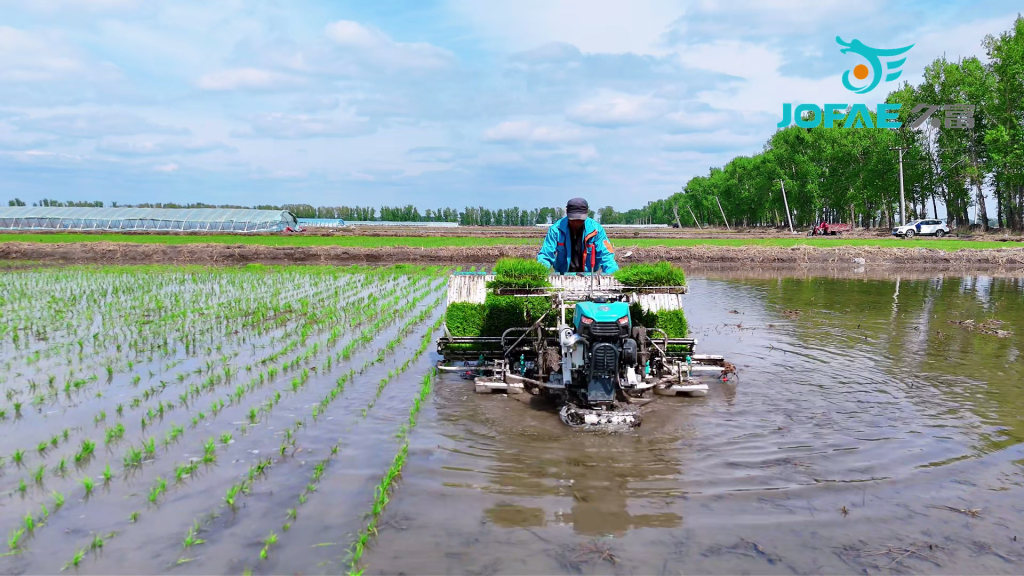
First-Season Operating Tips for Beginners
Your first season with a rice transplanter is about learning, not perfection.
- Level the field to within 3 cm. This is the single most important preparation step.
- Maintain a thin water layer of 1–2 cm. Deep water hides problems and causes floating seedlings.
- Use 20–25 day old mat seedlings. Younger or older seedlings reduce establishment rates.
- Test on a small strip first. Adjust hill spacing and planting depth before you commit to the whole field.
- Keep a steady speed. Speeding up causes missing hills and uneven depth.
These basics will get you through the first season with acceptable results.
Maintenance Habits That Protect Your Investment
A rice transplanter lasts longer with simple habits:
- Wash the machine after every use, especially the planting claws and trays.
- Lubricate moving parts according to the manual.
- Check bolts and belts before each season.
- Store it dry, covered, and off the ground.
- Do a full pre-season and post-season inspection.
Maintenance is not glamorous, but it is the difference between a machine that works for ten seasons and one that fails in three.
Common Mistakes Small Farmers Make
- Buying on price alone and ignoring parts support.
- Choosing a machine that is too heavy for soft or sloped fields.
- Skipping a field test before purchase.
- Underestimating the time needed for field preparation.
- Delaying maintenance until something breaks.
Avoid these, and your first rice transplanter will earn its keep.
FAQ
Can a small farm under 1 hectare justify a rice transplanter?
Only if labor is very scarce or you plan to rent it out. Otherwise, renting or sharing is usually more economical.
Is a 4-row manual model hard to operate?
It requires physical effort but is manageable for one person. Training and a level field make a big difference.
How much water do I need?
A thin layer of 1–2 cm is enough. Too much water causes floating and poor establishment.
Is a used machine a good idea?
Yes, if you can inspect it in person and confirm parts availability. Avoid machines with cracked frames or worn transmissions.
How often should I service it?
After every use for cleaning, and once before and after each season for full checks.
Conclusion: Your First-Season Decision Checklist
Choosing your first rice transplanter comes down to matching the machine to your farm, not to a spec sheet. Assess your area, field shape, soil, water, and budget. Decide whether to buy, rent, or share. Check the dealer and parts before you pay. Then prepare your field carefully and maintain the machine from day one. If you do these things, your first rice transplanter will reduce labor, improve timing, and pay for itself season after season.