
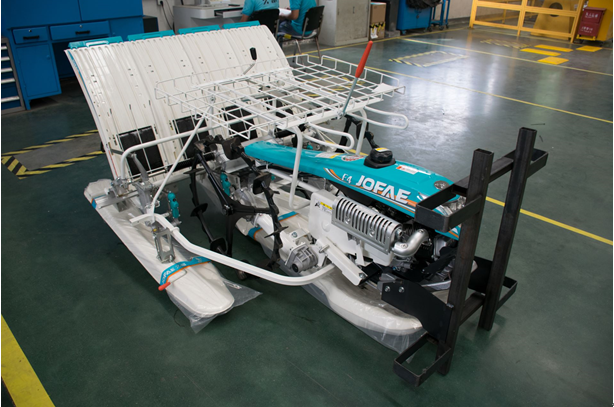
Rice transplanters have revolutionized modern rice farming, replacing back-breaking manual labor with efficient, mechanized solutions. Whether you are a smallholder farmer or managing a large-scale operation, understanding how much is rice transplanter is essential before making a purchase decision.
Prices vary significantly based on type, brand, row capacity, engine power, and additional features. This comprehensive guide covers general price ranges, specific costs in certain regions, tractor-mounted options, premium brand comparisons, and a detailed look at the top 10 rice transplanter machines with their prices and features.
General Price Ranges by Transplanter Type
To answer the question of how much is a rice transplanter, it helps to first look at the different types available. Here are the approximate global price ranges:
- Manual push-type: $150 – $500 – Basic hand-operated models suitable for very small plots
- Semi-automatic: $2,500 – $5,500 – Engine-powered but requires some manual seedling loading-
- Walking-type (self-propelled, 4-6 rows): $2,000 – $8,000 – Ideal for small to medium farms, available in gasoline or diesel.
- Riding-type (6-8 rows): $8,000 – $16,000+ – Higher efficiency, suited for larger, flat paddies.
- Premium riding-type with electronics: up to $35,000+ – Advanced features like GPS guidance and automatic controls
Additional electronic features such as auto-leveling systems, GPS guidance, and automated depth control can add 15–25% to the base price.
How Much Is a Rice Transplanter in the Philippines?
As one of Southeast Asia’s largest rice-producing countries, the Philippines has seen growing adoption of mechanical transplanters to address labor shortages and rising labor costs. So how much is a rice transplanter in the Philippines? Let’s look at the numbers.
Walk-behind (Walking-type) Prices
Walk-behind rice transplanters are the most common choice for Filipino farmers with small to medium-sized farms. Based on government procurement data from the Department of Agrarian Reform (DAR) and the Philippine Center for Postharvest Development and Mechanization (PhilMech):
- Single walk-behind units typically range from ₱280,000 to ₱645,000 per unit
- Bulk purchases reduce per-unit costs: 14 units at ₱3,920,000 (approximately ₱280,000 per unit)-
- A walk-behind transplanter provided by DAR Samar was valued at ₱645,000
If you are considering this category, a Walk-Behind Rice Transplanter offers an affordable entry point with reliable performance for small to medium farms.
Riding-type (Ride-on) Prices
Riding-type transplanters are significantly more expensive but offer much higher productivity:
- Single ride-on units start at over ₱1,000,000
- Bulk purchase examples: 3 units at ₱5,418,858 (approximately ₱1,806,286 per unit)
- Minimum capacity of 3.60 hectares per day costs approximately ₱1,400,000
Farmer testimonials highlight significant savings:
- A La Union farmer reported manual transplanting costs of ₱8,000–₱9,000 per hectare, compared to just ₱400 per hectare with a mechanical transplanter — a saving of over 95%
- Another farmer in Casiguran spent ₱10,000 per hectare for 25 laborers manually, versus ₱3,000 per hectare with a walk-behind transplanter
What Is the Price of a Tractor-Mounted Rice Transplanter?
For farmers wondering how much is a rice transplanter who already own a hand tractor, a tractor-mounted attachment offers a more affordable path to mechanization than purchasing a dedicated self-propelled machine. This section covers the price differences and key considerations for this cost-saving alternative.
The DOST Rice Transplanter Attachment (RTA) can transplant up to 1.6 hectares in seven hours, and farmers report at least a 12% increase in yield due to uniform planting.
Key takeaway: If you already own a suitable hand tractor, a mounted attachment can save you 30–50% compared to buying a dedicated machine with similar row capacity.
| Tractor Attachment vs. Dedicated Machine | ||
| Option | Price Range (USD) | Best For |
| Tractor-mounted attachment | Under ~$9,000 | Farmers who already own a 9+ HP hand tractor |
| Dedicated walk-behind transplanter | $2,500 – $6,500+ | Small to medium farms without an existing tractor |
| Dedicated riding-type transplanter | $8,000 – $15,000+ | Large farms with high daily output needs |
What Is the Cost of a Kubota Rice Transplanter?
Kubota is widely recognized as a premium brand in the rice transplanter market, known for advanced Japanese engineering and reliable performance. Its prices are generally higher than most regional alternatives — typically starting from a higher price bracket for riding-type models. For example, in India, Kubota rice transplanters range from approximately $3,350 for the KNP-4W walk-behind model toapproximately $23,800 for the SPV 8 riding-type model.
Exact pricing varies greatly by country, dealer, and import duties, so local inquiry is recommended.
For farmers in developing countries where budget is a primary concern, however, premium brands are not always the most practical choice. Below we break down more cost-effective options that offer better value for money.
Top 10 Rice Transplanter Machines – Price & Features Comparison
To help you compare how much is a rice transplanter across different brands and types, here is a side-by-side list of 10 popular models.
| # | Machine Name | Type | Rows | Engine Power | Approx. Price (USD) | Key Feature |
| 1 | Kubota SPV-6CMD | Riding-type | 6 | 19.3 HP diesel | ~$15,500+ | Auto Monroe System, B20 biodiesel compatible |
| 2 | Kubota SPV8 | Riding-type | 8 | 21.6 HP diesel | ~$21,000+ | High-speed performance, excellent muddy field mobility |
| 3 | Jofae G61A | Riding-type | 6 | Yanmar diesel | ~$11,000 – $13,000 | Pot/blanket seedling dual-use, hydraulic auto-balance, lightweight design |
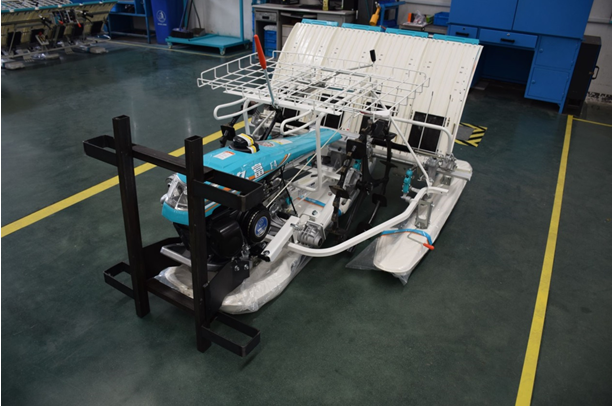
| 4 | Jofae F4 | Walk-behind | 4 | 2.6 kW gasoline | ~$1,700 – $2,100 | Pot/blanket dual-use, 8–15% yield increase, 177kg lightweight |
| 5 | Yanmar AP6 | Walk-behind | 6 | Diesel | ~$3,200 – $4,100 | Reliable Japanese engineering, fuel-efficient |
| 6 | Yanmar AP4 | Walk-behind | 4 | Diesel | ~$3,000 – $3,800 | Compact design for smaller paddies |
| 7 | Iseki PC6 | Walk-behind | 6 | Kawasaki air-cooled 4-stroke | ~$3,600 | Low vibration, low noise, low fuel consumption |
| 8 | Mahindra MP 461 | Walk-behind | 4 | 3.9 HP | ~$3,350 | Wide feeder belt system for even transplantation |
| 9 | Shaktiman Paddy Ropak 37 | Walk-behind | 4 | 4 HP | ~$450 – $500 | Designed for hilly and plain terrain |
| 10 | VST Shakti | Walk-behind | 46118 | Diesel | ~$2,500 – $4,000 | Popular in South Asian markets, durable design |
Key Factors Affecting Rice Transplanter Prices
Several factors influence how much is a rice transplanter beyond the base price tag.
- Type (walking vs riding): Walking-type models are more affordable; riding-type models cost significantly more but offer higher efficiency
- Row count (4/6/8): More rows increase productivity but raise the price. Small farms typically choose 4–6 rows
- Engine type: Gasoline models have lower upfront costs; diesel offers better fuel economy long-term
- Brand reputation: Japanese brands (Kubota, Yanmar, Iseki) command premium pricing; Chinese and local brands offer more budget-friendly options
- Terrain and field conditions: Flat, large fields suit riding-type; irregular or terraced fields require walking-type
- Included accessories: Optional add-ons such as floating mats, stainless-steel seedling trays, adjustable depth control systems, and spare parts kits are available to meet specific farming needs. Depending on your requirements, these optional accessories can add 10–20% to the total machine cost.
Is a Rice Transplanter Worth the Investment? (ROI)
Now that you know how much is a rice transplanter, the next question is whether the investment pays off.
| Labor Cost Comparison | ||
| Method | Cost per Hectare (USD) | Labor Required |
| Manual transplanting | ~$140 – $180 | 14–25 workers |
| Mechanical transplanter | ~$7 – $55 | 2–6 workers |
Additional Benefits
- Higher yields: Uniform planting leads to 5–12% higher yields
- Reduced labor dependency: No need to wait for available workers during peak season
- Faster planting: Up to 1.6 hectares in 7 hours with a walk-behind model
- Attracts younger farmers: Modern equipment makes farming less physically demanding and more appealing to the next generation
How to Choose the Right Rice Transplanter
Before making a purchase, consider this practical checklist:
- Farm size: Small farms (<2 ha) → walking-type; Large farms (>5 ha) → riding-type
- Budget: Include purchase price, fuel, maintenance, and spare parts availability
- Local after-sales support: Ensure spare parts and repair services are available in your area
- Terrain suitability: Flat fields suit riding-type; hilly areas need walking-type
- Operator skill level: Simpler models are better in areas with limited training
- Must-have features: Adjustable planting depth, floating mat adaptability, easy gear shift
Conclusion
So, how much is a rice transplanter? The answer ranges from a few hundred to over thirty thousand dollars — but the right price depends entirely on your farm’s size, terrain, and budget.
For most small to medium farms in developing regions, a reliable walk-behind or tractor-mounted model offers the fastest return on investment without the premium price tag of top-tier brands.
Ready to find the right machine for your farm? Contact us for a personalized quote, or browse our selection of walk-behind and riding-type transplanters designed for real-world farming conditions.