
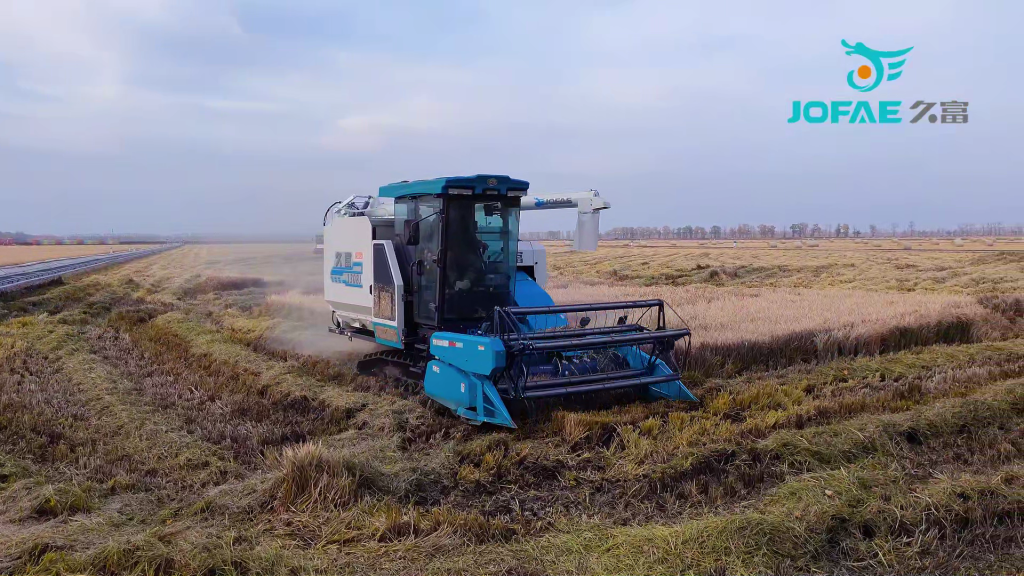
When harvest season arrives, few machines are more important to modern agriculture than the combine harvester. Driving across vast wheat fields or corn belts, this remarkable piece of machinery performs in a single pass what once required dozens of workers and multiple separate operations. But how does a combine harvester work? The answer lies in understanding that this machine is essentially a mobile processing plant—a “factory on wheels” that cuts, threshes, separates, cleans, and stores grain all in one continuous motion. The name “combine” comes from the fact that it combines three essential harvest functions: reaping (cutting), threshing (separating grain from stalks), and winnowing (cleaning).
In this complete guide, we’ll walk through exactly how a combine harvester works—from the moment the header first touches the crop to the moment clean grain flows into the storage tank.
What Is a Combine Harvester?
A combine harvester is a powerful agricultural machine designed to harvest grain crops such as wheat, corn, rice, barley, oats, soybeans, and even sunflowers and canola. It eliminates the need for separate machines or large manual workforces by performing the entire harvesting process efficiently.
Modern combines are available in a wide range of sizes—from smaller units that can handle several hectares per day to massive self-propelled machines capable of cutting swaths more than 40 feet wide. Self-propelled models, which have their own engines, first appeared in the 1940s and have since become the industry standard.
The Four Main Systems of a Combine Harvester
Before we dive into the step-by-step process, it helps to understand the four major systems that work together inside every combine:
- Header (cutting and gathering) – Cuts the crop and feeds it into the machine
- Threshing and separation system – Separates grain from straw and other plant material
- Cleaning system – Removes chaff, dust, and debris
- Grain handling and storage system – Collects clean grain and stores it
Each system must work in perfect harmony with the others. As one expert puts it, “A combine is a really sophisticated machine, when you consider everything it’s doing at one time”.
Step-by-Step: How Does a Combine Harvester Work?
Now let’s answer the central question: how does a combine harvester work? The process unfolds in five distinct stages.
Step 1 – Cutting the Crop (The Header)
The process begins at the very front of the machine with the header (also called the cutting platform). The header is designed to cut the crop close to the ground and gather it into the machine.
Here’s what happens:
- A revolving reel at the front pulls the standing crop toward the machine
- A cutter bar (or series of blades) cuts the plants near ground level
- The cut crop is gathered by a spiral auger that moves it toward the center of the header-
- Retractable pickups then push the crop into the feeder house, which transports it into the main body of the combine-
The feeder house does more than just convey material—it also flattens the inflowing crop to prepare it for smooth feeding into the threshing system.
Different crops require different headers. For example, a grain platform works for wheat and soybeans, while a corn header (which we’ll discuss later) is specifically designed for harvesting corn. The header can be changed based on the crop being harvested.
Step 2 – Feeding into the Threshing System
Once the crop enters the combine through the feeder house, it moves into the threshing mechanism. This is where the grain is separated from the stalks and seed heads.
The threshing system typically consists of:
- A rotating cylinder or rotor with rasp bars (grooved metal bars)
- A concave grate—a curved, perforated surface that surrounds the rotor
As the crop passes through the gap between the rotor and the concave:
- The rubbing action between the rasp bars and the concave knocks the grain kernels free from the heads, cobs, or pods
- The grain falls through the perforations in the concave
- The straw and other plant material continue moving through the machine
The effectiveness of this rubbing action depends on two critical adjustments: rotor speed and concave clearance. If the clearance is too tight, grain gets crushed. If the rotor spins too fast, grain gets cracked. The optimum settings vary by crop type and moisture level.
Step 3 – Separating Grain from Straw
After threshing, the mixture of grain, straw, and other plant matter moves to the separation area. The goal here is to recover as much clean grain as possible while minimizing loss.
The separation process works like this:
- Straw walkers (shaking mechanisms) or rotary separators vibrate and toss the material
- The shaking motion allows the heavier grain to fall through while the lighter straw is carried toward the back of the machine
- Some grain and chaff go directly to the cleaning system
Straw that cannot pass through the separation system travels to the back of the combine, where it is either chopped and spread across the field or dropped in windrows for baling.
Step 4 – Cleaning the Grain
The grain then enters the cleaning system—a critical stage that ensures the harvested product is free from chaff, dust, and debris.
The cleaning system consists of:
- A cleaning fan that produces a blast of air-
- Upper and lower vibrating sieves (screens)
Here’s how it works:
- The fan blows air upward through the falling grain, carrying away lightweight chaff and dust
- The upper sieve does the main separating work, allowing grain to pass through while larger debris is carried off
- The lower sieve fine-tunes the sample, catching any remaining impurities
“The upper sieve should do the main separating,” explains one product specialist. “The lower sieve is for fine-tuning the sample”. If the fan is set too high, it can blow grain out of the machine.
Step 5 – Collecting and Storing the Grain
Finally, the clean grain drops into a clean-grain auger at the bottom of the sieves. This auger conveys the grain to an elevator, which lifts it into the grain tank (storage bin) on top of the combine.
When the grain tank is full:
- The operator extends the unloading auger (a long pipe-like conveyor)
- Grain is transferred into a truck or grain cart driving alongside the combine
- The combine can continue harvesting while unloading, minimizing downtime
Meanwhile, the straw and other crop residue exit the back of the machine. Modern combines feature straw choppers that either chop and spread residue evenly across the field (returning nutrients to the soil) or deposit it in windrows for baling.
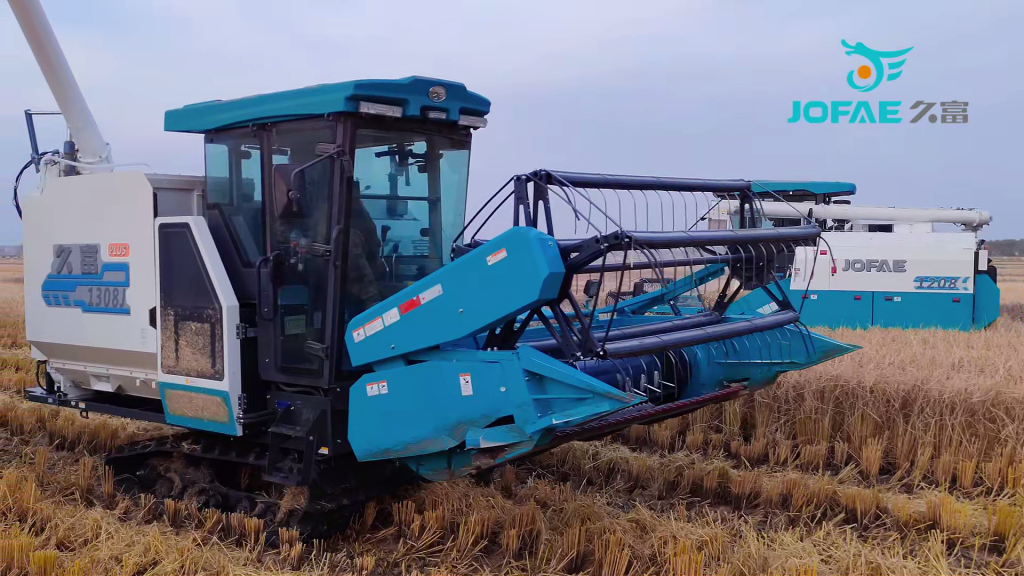
How Does a Corn Combine Harvester Work?
Corn presents unique challenges compared to small grains like wheat, so it’s worth asking: how does a corn combine harvester work?
The key difference lies in the corn header (also called a corn head). Unlike a grain platform that cuts entire plants, a corn header is designed to harvest only the ears.
A corn header features:
- Row dividers that separate each row of corn as the machine moves through the field-
- Snapping rolls (stalk rolls) that grab the corn stalks and pull them downward-
- The downward pulling action snaps the ears off the stalks, leaving the stalks standing or cutting them for residue management-
- Only the ears (along with some husk material) enter the combine’s threshing system-
Once the ears enter the machine, the process follows the same steps as grain harvesting: threshing (removing kernels from the cobs), separation, cleaning, and storage. The reduced amount of plant material entering the machine—since stalks are left behind—allows corn combines to operate at higher efficiency and often faster speeds.
How Fast Does a Combine Harvester Work?
You might wonder: how fast does a combine harvester work? The answer depends on several factors.
During harvesting operations, most combine harvesters travel at 2 to 6 miles per hour (about 3.2 to 9.7 km/h)-. Some advanced models can reach up to 7 mph (about 11 km/h) when harvesting corn under ideal conditions.
Several factors affect operating speed-:
- Crop yield – Heavier crops require slower speeds to avoid overloading the threshing system
- Field conditions – Wet or uneven ground may require reduced speed
- Header width – Wider headers cover more ground but may require slower speeds in heavy crops
- Machine capacity – Larger combines with more powerful engines can maintain higher speeds
When traveling between fields on roads, combines can reach 20 to 25 mph (about 32 to 40 km/h)-.
It’s important to note that the engine must maintain full RPM to keep the threshing and separation systems working properly-. Operators adjust ground speed through the transmission rather than by slowing the engine.
Key Factors That Affect Combine Harvester Performance
Even with a perfect understanding of how does a combine harvester work, achieving optimal performance requires careful attention to several variables:
- Header adjustment – The header must be set at the right height and angle for the specific crop and field conditions-
- Threshing parameters – Rotor speed and concave clearance must be matched to the crop type and moisture content
- Cleaning settings – Fan speed and sieve openings need adjustment based on the amount and type of material being processed
- Forward speed – Driving too fast causes incomplete separation and increased grain loss; too slow reduces efficiency-
- Crop condition – Wet or green material may require different settings than dry, mature crops
As one expert notes, all these processes “have to interact smoothly to get optimum performance”.
Conclusion
So, how does a combine harvester work? In essence, it performs a complete harvesting sequence in one continuous pass: cutting, feeding, threshing, separating, cleaning, and storing. This single machine—a “factory on wheels”—has revolutionized agriculture, replacing dozens of laborers and multiple field passes with one operator in a fraction of the time. Whether for wheat, corn, soybeans, or rice, the combine harvester remains an indispensable tool for modern farming.
At Jofae, we are committed to providing high‑quality combine harvesters and expert support to help farmers get the most out of every harvest. Understanding how the combine harvester works empowers operators to fine‑tune their equipment, reduce losses, and boost productivity—ensuring that food reaches tables more efficiently than ever.