
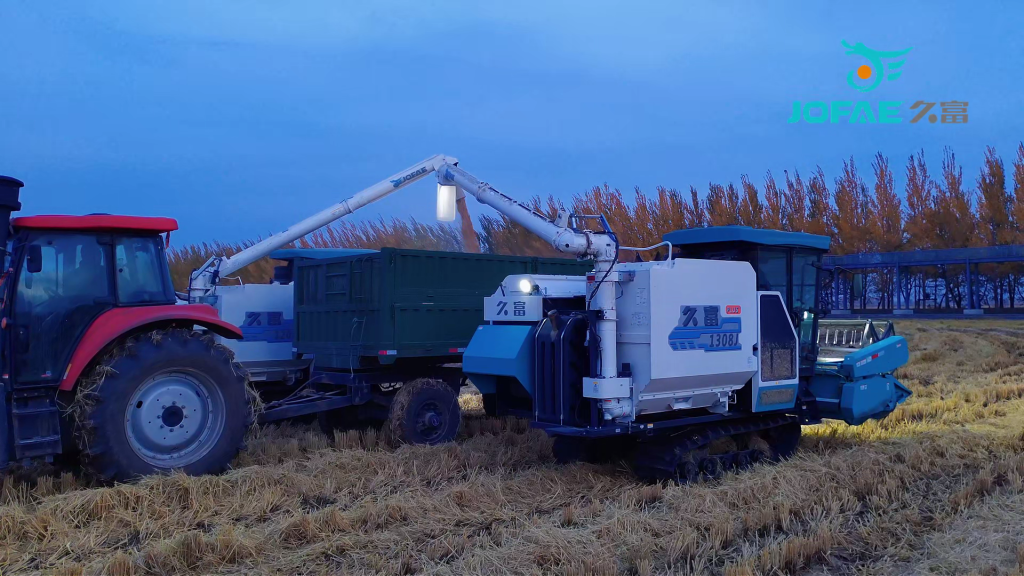
If you’ve ever watched a combine harvester working across a field, you might be surprised by how slowly it moves. Unlike tractors that can race across fields, combines crawl along at what seems like a walking pace. So how fast is a combine harvester really?
The answer depends entirely on whether the machine is working in the field or traveling between fields. In field conditions, most combine harvesters operate at 2–6 mph (3.2–9.7 km/h) during harvesting. But when moving between fields on public roads, modern combines can reach 20–25 mph (32–40 km/h).
This guide breaks down everything you need to know about combine harvester speeds—from field performance across different crops to road transport speeds, the factors that limit how fast a combine can go, and the latest automation technologies that are changing how farmers manage speed.
How Fast Does a Combine Harvester Go in the Field?
The most common question farmers ask is how fast does a combine harvester go when it’s actually harvesting. In real field conditions, most combines operate between 2 and 6 miles per hour during harvesting.
However, the most typical working speed falls in a narrower range. In practice, most combines spend the majority of their time at 3.0–4.0 km/h (1.9–2.5 mph) . A good target speed for many crops is around 5.0 km/h under normal conditions.
This may sound painfully slow compared to cars or even tractors, but it reflects the enormous workload a combine performs with every foot of forward progress. The machine is simultaneously cutting the crop, feeding it into the threshing system, separating grain from straw, cleaning the grain, and storing it in the grain tank—all while moving forward.
What Affects How Fast a Combine Harvester Goes?
Several factors determine exactly where within that 2–6 mph range a combine will operate on any given day:
Crop Type
Different crops feed through the combine differently. Wheat, with its heavy straw, often requires slower speeds than corn or soybeans. The plant structure, stalk thickness, and grain-to-straw ratio all influence how fast the machine can process the material.Yield and Crop Density
High-yielding fields produce more crop material per acre, which means more material must pass through the combine’s threshing and separation systems each second. In heavy crops, operators must slow down to prevent overloading the machine. Conversely, in lighter crops, speeds can increase toward 5–6 mph.Moisture Content
Wet or damp crops are heavier and more difficult to thresh and separate. The material doesn’t flow through the machine as easily, and grain is harder to separate from the straw. Damp conditions often require slower speeds to maintain clean grain and minimize losses.Field Terrain and Conditions
Hilly terrain, waterways, ditches, and terraces all affect how fast a combine can safely operate. Uneven ground can cause the header to bounce, leading to uneven cutting and increased losses.Machine Throughput Capacity
Every combine has a maximum throughput—the volume of crop material it can process per second. Move too fast and the threshing system becomes overloaded, separation efficiency drops, and cleaning capacity diminishes. Experienced operators focus on maintaining a steady, consistent crop flow rather than simply pushing for higher ground speed.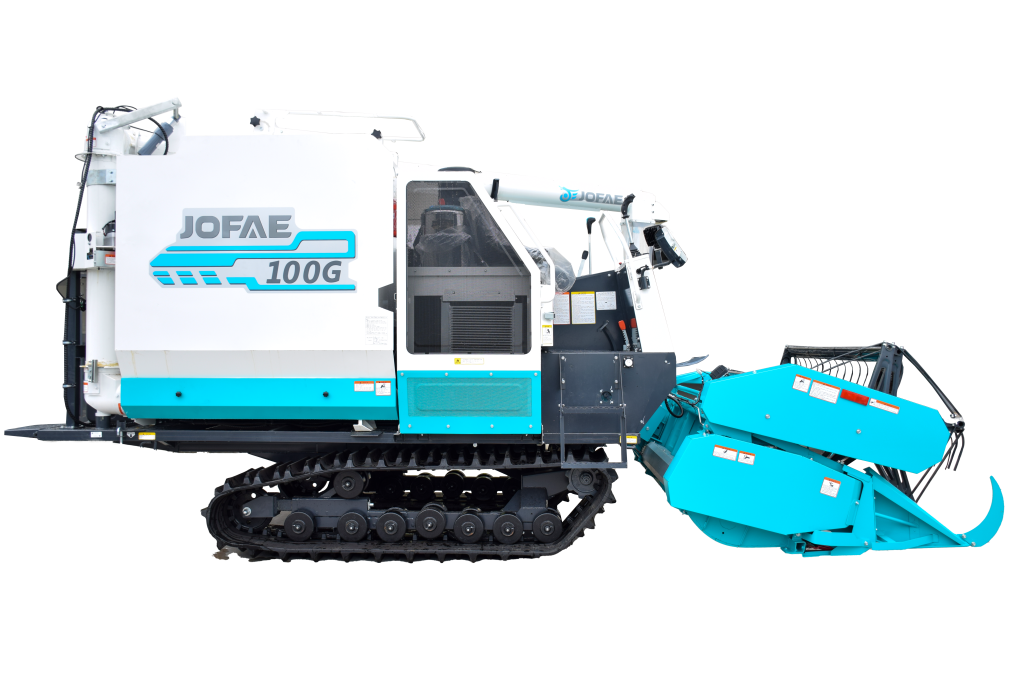
How Fast Does a Combine Go When Harvesting Different Crops?
How fast does a combine go when harvesting varies significantly by crop type. Here’s what to expect for major crops:
Wheat Harvesting Speed
For wheat, most combines operate around 3–5 mph (4.8–8 km/h) under normal conditions. However, when straw is heavy or tough, yields are high, or crop moisture is elevated, speeds may drop to around 2 mph (3.2 km/h) . In dense wheat fields, slowing down slightly improves separation and reduces grain losses.
Corn Harvesting Speed
Corn harvesting typically runs between 3–6 mph (4.8–9.7 km/h) , depending on crop conditions and header size. High-yield corn fields often require operators to slow down to prevent overloading the machine. Modern combines have shown that careful speed management can maintain excellent grain samples and minimal loss.
Soybean Harvesting Speed
Soybeans generally allow speeds up to about 3.5 mph (5.6 km/h) . However, operators must adjust fan and rotor speed settings to keep the grain clean. The harvest throughput—a function of harvest speed and yield—directly affects grain loss, fuel economy, and grain quality during soybean harvest.
Rice Harvesting Speed
For rice, an optimal field speed is around 3.8 km/h, which helps keep grain loss very low. There is a clear relationship between field speed and grain loss—faster speeds generally increase losses, so finding the right balance is key.
Other Crops
For barley, oats, canola, and sunflowers, speeds typically fall within the 3–5 mph range, with adjustments made based on crop conditions and machine settings.
How Fast Is a Combine Harvester on the Road?
When it’s time to move from one field to another, how fast is a combine harvester changes dramatically. Modern combines are designed for efficient road transport, with top speeds of 20–25 mph (32–40 km/h) .
Advanced transmissions allow combines to travel up to 40 km/h (25 mph) when moving between fields. Similarly, many multi-crop axial-flow combines offer road speeds of around 25 km/h for efficient field transfers.
It’s important to note that these high speeds are only used for transportation between fields. Once the header enters the crop, the machine immediately returns to its much slower working speed. Transport speed helps farmers reduce travel time between fields, especially in regions where farms are spread out.
When towing a combine, manufacturers typically recommend not exceeding 20–25 km/h (12.4–15.5 mph) .
Modern Technology and Combine Speed
The question how fast is a combine harvester is increasingly being answered not by the operator but by the machine itself. Advanced automation technologies are transforming how combines manage speed.
Ground Speed Automation
Ground Speed Automation manages the combine’s speed based on operator inputs for grain loss, engine load, and rotor pressure to maintain consistent throughput. This system ensures the machine operates at the optimal speed for current conditions without overloading the internal systems.
Harvest Settings Automation
Harvest Settings Automation automatically adjusts rotor speed, fan speed, and concave, chaffer, and sieve clearances based on acceptable limits for grain loss, foreign material, and broken grain. This delivers a more consistent and higher‑quality harvest regardless of operator skill level. This technology has expanded to cover a wide range of crops including lentils, peas, rye, triticale, oats, and sunflowers.
Predictive Ground Speed Automation
Predictive Ground Speed Automation takes speed management to the next level. Using forward‑looking cameras that can “see” the crop ahead of the machine, combined with pre‑harvest satellite images to generate a predictive field map, the system proactively manages ground speed to maximize combine throughput.
This technology also features Green Crop Detection, which uses enhanced processing power and a highly trained algorithm to accurately detect green crops within an otherwise‑mature stand. This allows the system to adjust ground speed in response to a wider range of crop conditions, improving overall harvest efficiency.
Productivity Gains
These automation technologies deliver measurable results. Farmers using modern combines with optimized technology packages have reported 15–20% increases in productivity compared to older machines. On a four‑week harvest, this can reduce harvest time by four to five days—a critical advantage when rain or storms are approaching.
Why Don’t Combine Harvesters Go Faster?
If you’re wondering how fast is a combine harvester and why it can’t go faster, the answer lies in the machine’s complexity. A combine performs four operations simultaneously:
- Cutting the crop with the header
- Threshing grain from the plant
- Separating grain from straw
- Cleaning grain before it enters the tank
Each of these steps requires careful timing and mechanical capacity. If the machine moves too quickly, these systems cannot keep up, leading to grain loss or poor grain quality.
Experience shows that there is a direct relationship between field speed and grain loss. Threshing losses significantly influence overall grain loss, and operating at the right speed can keep losses to a minimum. For rice, a field speed around 3.8 km/h keeps grain loss very low.
The goal isn’t speed—it’s efficiency. A smooth, consistent feed through the machine often delivers better harvest performance than simply pushing for higher ground speed.
What Size Combine Harvester Do I Need?
The question what size combine harvester do I need is closely related to harvesting speed. A wider header allows you to cover more acres per hour at the same ground speed.
A useful approximation: acres per hour ≈ header width (feet) × speed (mph) / 8.25
For example, a 35‑foot header at 4 mph would cover approximately 17 acres per hour. A 45‑foot header at the same speed would cover about 22 acres per hour.
When choosing combine size, consider:
- Total farm acreage and how many acres need to be harvested
- Harvest window—how many days you have to complete harvest
- Crop types and typical yields in your area
- Budget and available capital
Modern combines can harvest impressive amounts per hour—some models are capable of handling over 100 tons of wheat per hour in the feederhouse. These machines are designed to make fewer passes, cut fuel use, and reduce compaction—all while maintaining serious output.
Tips for Optimizing Combine Harvester Speed
Here are practical tips for getting the most from your combine’s speed:
- Adjust settings for each crop—different crops require different speeds and machine settings
- Monitor grain loss—use loss sensors and visual checks to determine if you’re going too fast
- Keep the engine at full operating RPM—this ensures the threshing and separation systems operate at designed speeds
- Use available automation—technologies like Ground Speed Automation and Predictive Ground Speed Automation take the guesswork out of speed management
- Maintain your machine—regular maintenance prevents breakdowns and ensures optimal performance
- Watch for changing conditions—crop moisture, density, and field terrain change throughout the day and require speed adjustments
- Focus on consistent crop flow—a steady feed is more important than maximum speed
FAQs
How fast is a combine harvester in mph?
In the field, 2–6 mph. On the road, 20–25 mph.How fast does a combine harvester go in km/h?
Field speeds range from 3.2–9.7 km/h, while road transport speeds reach 32–40 km/h.Can a combine harvester go 20 mph?
Yes, but only during road transport between fields. The machine cannot harvest at that speed.What is the best speed for harvesting wheat?
Most combines operate at 3–5 mph (4.8–8 km/h) for wheat. In high‑yield or tough conditions, reduce to about 2 mph (3.2 km/h).Does driving faster always mean more acres per hour?
Not necessarily. While higher speed increases acres per hour on paper, excessive speed leads to increased grain loss, reduced grain quality, and machine overloading. The net result can be lower profitability despite covering more ground.What is a Full‑feed Combine Harvester?
A Full‑feed Combine Harvester is a type of combine where the entire crop—including stalks and straw—is fed into the threshing mechanism. This is the standard design for most modern combines, as opposed to “head‑feed” designs that only process the grain heads. Full‑feed systems offer higher throughput capacity and are better suited for a wider range of crops.Conclusion
In summary, a combine harvester runs at 2–6 mph (3.2–9.7 km/h) in the field and 20–25 mph (32–40 km/h) on the road, but the best speed always depends on crop type, yield, moisture, and terrain. Going faster isn’t always better—it often increases grain loss. The real goal is balancing speed with quality and machine capacity. At Jofae, we design reliable harvesters and smart automation to help you achieve that balance with ease. Whether you operate a Full-feed Combine Harvester or any other model, remember: consistent crop flow beats raw speed every time.