
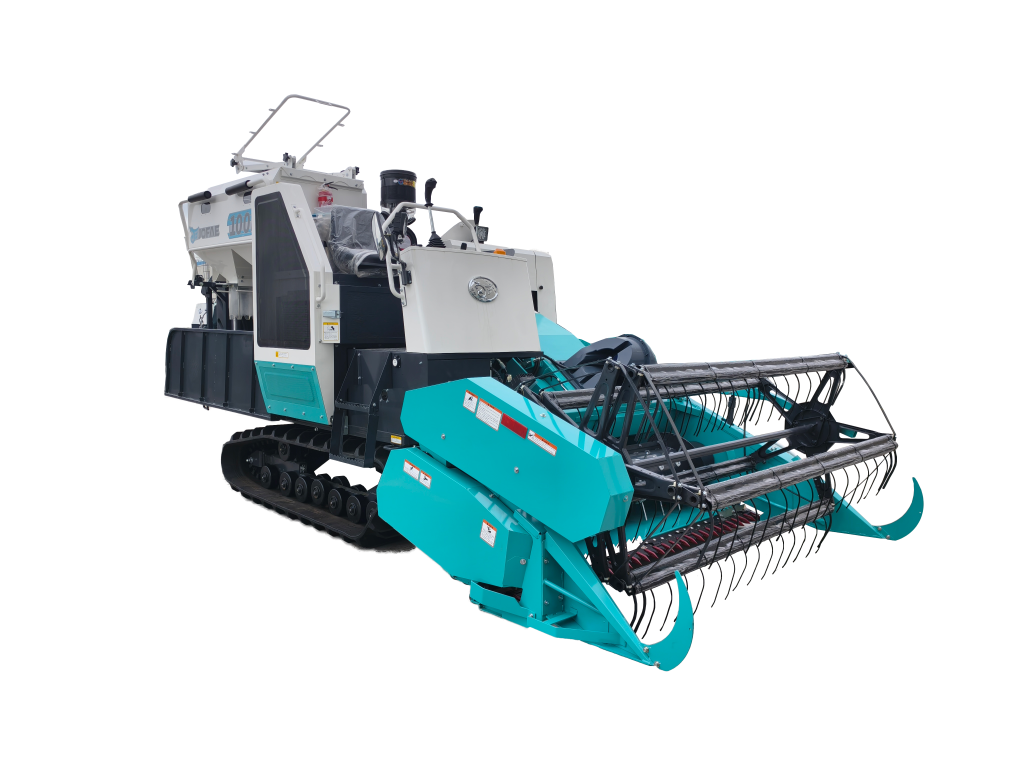
If you’ve ever wondered how much fuel does a combine harvester use, you’re not alone. Fuel consumption is one of the biggest operating costs in modern agriculture, and understanding exactly how much fuel does a combine harvester use can make the difference between a profitable harvest and a costly one. Whether you’re a farmer planning your seasonal budget, a custom harvester tracking operational costs, or considering new equipment, knowing how much fuel does a combine harvester use is essential.
The short answer: a typical combine burns anywhere from 4.5 to 30 gallons of diesel per hour, depending on size, engine power, crop conditions, and operation. But the real question—how much fuel does a combine harvester use—is more nuanced. This guide breaks down everything you need to know.
How Much Fuel Does a Combine Harvester Use Per Hour?
When asking how much fuel does a combine harvester use, the most common measurement is gallons per hour (GPH). Here’s a breakdown by combine class:
| Combine Class | Engine Horsepower | Fuel Consumption (GPH) | Common Models |
| Class 5 | Under 280 hp | 6–10 GPH | Older/smaller mid-size |
| Class 6 | 280–360 hp | 9–14 GPH | John Deere S760, Case IH 7120 |
| Class 7 | 360–500 hp | 12–18 GPH | John Deere S670/S780, Case IH 7230 |
| Class 8 | 500–600 hp | 16–22 GPH | John Deere S790, Case IH 8250 |
| Class 9 | 600–680 hp | 20–26 GPH | John Deere X9 1000, Case IH 9250 |
| Class 10 | 680+ hp | 24–30 GPH | John Deere X9 1100, CLAAS LEXION 8900 |
Source: ASABE standards, Nebraska Tractor Test Laboratory data
To put this in perspective: a Case IH 1440 (140 hp) consumes about 4.5 GPH, while a New Holland TR70 burns roughly 8.5 GPH. At the upper end, a John Deere S770 averages ~16 GPH, and the S780 about 20.6 GPH. The ASABE benchmark is 0.044 gallons per horsepower-hour at full load. So if you’re calculating how much fuel does a combine harvester use with a 400-hp engine at 75% load:
400 hp × 0.044 × 0.75 = 13.2 GPH. That formula gives a solid starting point for your own estimate.
How Much Fuel Does a Combine Harvester Use Per Acre?
Gallons per hour is only half the story—how much fuel does a combine harvester use per acre is more operationally relevant. Typical ranges by crop:
| Crop | Fuel Consumption (Gallons/Acre) | Notes |
| Wheat (small grain) | 0.5–0.9 | Dry conditions, high efficiency |
| Soybeans | 0.7–1.2 | Moisture variability |
| Corn | 0.8–1.5 | Higher due to throughput |
Real-world example: a John Deere S770 in South Texas wheat averaged 18.4 acres/hour at 16 GPH → 0.9 gal/acre. The S780 used 20.6 GPH for 19.1 acres/hour → 1.08 gal/acre (29% more fuel for only 3.8% more productivity). This shows that when you ask how much fuel does a combine harvester use, bigger isn’t always more efficient. Metric studies report 11–16.8 liters per hectare, and for rice in Malaysia, 14.89 L/ha was recorded.
Key Factors That Affect How Much Fuel a Combine Harvester Uses
Understanding how much fuel does a combine harvester use requires examining multiple variables:
- Engine load – Fuel burn tracks load, not time. 60–70% load burns ~14–15 GPH; 90% load pushes to 17–18 GPH.
- Crop type and yield – Specific fuel consumption decreases with higher yield, but the straw-to-grain ratio matters heavily. At 4.5 t/ha with 1:1 grain:straw, consumption is 2.83 L/t; at 1:2, it jumps 47% to 4.15 L/t.
- Field conditions – Soft soil and steeper slopes significantly increase fuel use. Wet or green crops push to the upper range.
- Machine settings – Dull blades reduce efficiency, while proper rotor/concave adjustments can save over 30% fuel and improve grain quality.
- Idle and transport – Telematics show combines spend 18–20% idling and 13–15% in transport, consuming 12–14% of total fuel outside harvesting—about 4.7 tons of CO₂-equivalent per machine annually. So when you evaluate how much fuel does a combine harvester use, don’t ignore non-harvesting time.
How to Calculate Fuel Consumption for Your Own Combine
To get a precise answer to how much fuel does a combine harvester use for your operation:
- Hourly consumption = Engine HP × 0.044 × Load Factor (0.60–0.85).
- Per-acre consumption = GPH ÷ acres/hour.
- Adjust for conditions – light, dry crops use lower end; heavy, tough crops use upper end.
Advanced digital twin systems now predict fuel use with an error of just 0.24 L/h, and online calculators are also available.
Practical Tips to Reduce How Much Fuel Your Combine Harvester Uses
Now that you know how much fuel does a combine harvester use, here are proven ways to cut costs:
- Optimize settings – Adjust rotor speed and concave to increase throughput; documented savings over 30%. Some farms have cut 3 L/ha after fine-tuning.
- Reduce idle time – If idling over 3–4 minutes, raise rpm to 1,200 to avoid inefficient burn and carbon buildup. Reducing idle/transport could lower global warming potential by 1.3 tons per machine per year.
- Maintain regularly – Clean air/fuel filters and replace worn blades.
- Right-size your machine – The John Deere X Series offers 20% better fuel efficiency per bushel than older models. Choose a header matched to horsepower—the S780’s high consumption was partly due to an undersized header.
- Consider new technologies – Hybrid electric combines can reduce fuel by 6.4%; extended-range hybrid systems show 21.1% savings; adaptive hydraulic drives can reach 1.5 L/t.
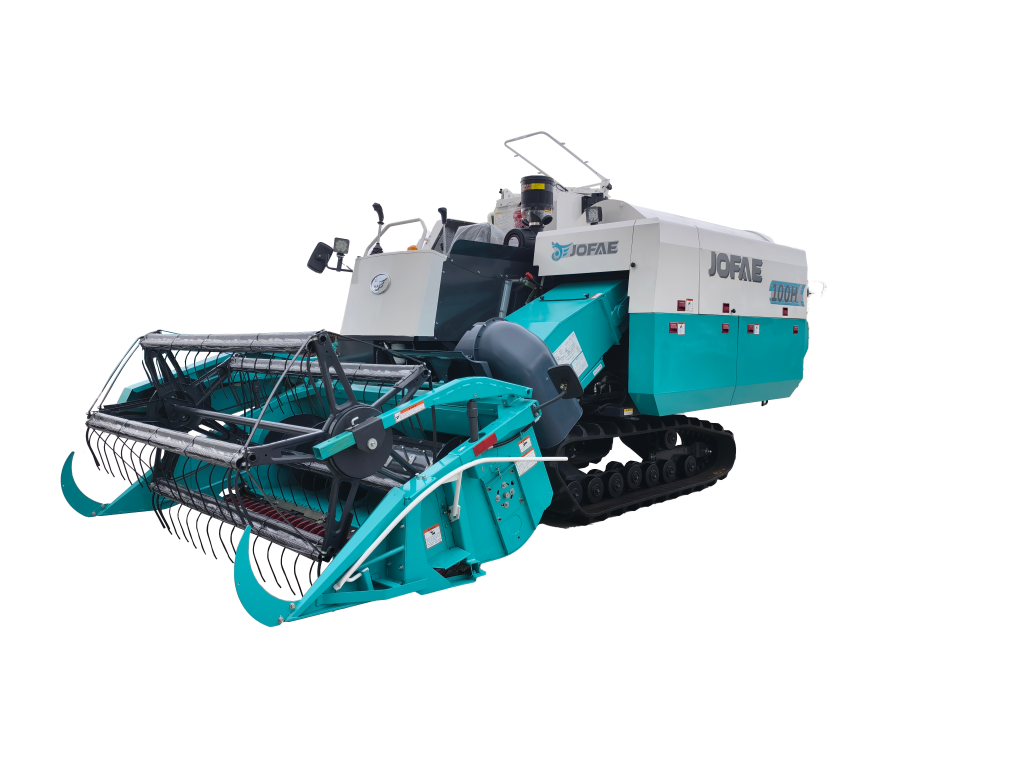
When selecting equipment, it’s also wise to compare models that are engineered for efficiency. For instance, the JF100H Full-feed Combine Harvester is built with advanced drivetrain optimization and is known for competitive fuel economy in its class—a practical choice if you’re serious about lowering your operating costs.
Key Takeaways: How Much Fuel Does a Combine Harvester Use?
To summarize the answer to how much fuel does a combine harvester use:
- Per hour: 4.5–30 gallons (class-dependent)
- Per acre: 0.5–1.5 gallons (crop-dependent)
- Per ton: as low as 2.83 L/t under optimal conditions
- Wasted fuel: 12–14% goes to idle/transport
The most important insight is that fuel burn follows engine load, not time. By optimizing settings, reducing idle, maintaining equipment, and choosing efficient models like the JF100H Full-feed Combine Harvester, you can significantly reduce how much fuel does a combine harvester use and improve your bottom line. Whether you run a Class 5 at 6 GPH or a Class 10 at 30 GPH, understanding these drivers is the first step to more profitable harvesting.