
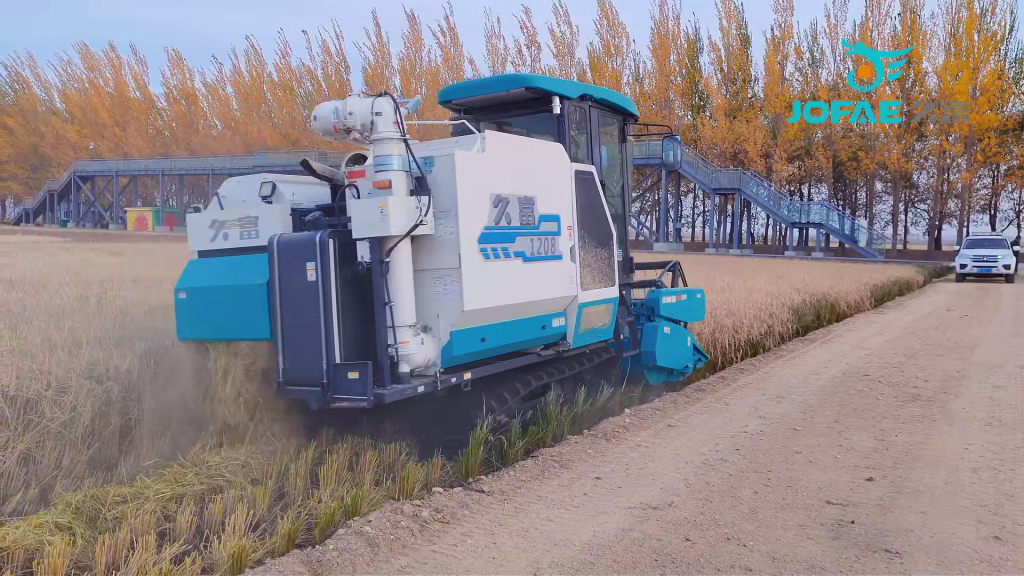
If you’re a grain farmer or contractor searching for new harvesting equipment, you’ve likely asked yourself: what is the best combine harvester for your operation? It’s one of the most important—and most expensive—decisions you’ll make.
The honest answer is that there is no single “best” machine for everyone. The right combine depends on your farm size, crop types, harvest conditions, budget, and dealer support. However, by understanding the top brands, their flagship models, and what each excels at, you can determine which combine harvester is the best for you.
This guide compares the industry’s leading manufacturers—John Deere, Case IH, New Holland, and Claas—and breaks down their 2026 lineups to help you make an informed decision.
The Major Players: Who Makes the Best Combine Harvester?
When asking who makes the best combine harvester, four names consistently rise to the top: John Deere, Case IH, New Holland, and Claas. Together with AGCO (Fendt/Massey Ferguson), these manufacturers dominate the global market, with the top three companies holding about 46% market share.
Let’s examine each brand’s strengths and flagship models.
1. John Deere: The Automation Leader
Best for: Farmers who want cutting-edge precision technology, strong resale value, and an extensive dealer network.
John Deere’s combine lineup spans the S-Series (mid-to-large) and X-Series (ultra-high capacity). The John Deere X9 1100 is their flagship, delivering 690 max horsepower and capable of harvesting up to 7,200 bushels per hour. The X9 1100 is positioned as more than a harvest machine—it’s a “connected overall system” with AI-assisted environment recognition and stereo cameras.
For 2026, John Deere also introduced the S7 Series, described as its first “digital combine,” delivering up to 20% greater productivity and 10% reduction in fuel. consumption. The S7 900 offers 543 horsepower.
2. Case IH: The Single-Rotor Specialist
Best for: Farmers who prioritize gentle grain handling, excellent grain quality, and subscription-free precision technology.
Case IH’s Axial-Flow single-rotor design has been a hallmark of the brand for decades. The philosophy is simple: a single rotor provides even, gentle threshing that preserves grain quality and straw condition.
For 2026, Case IH has dramatically expanded its lineup with the AF Series. The AF11 is the flagship twin-rotor model with 775 horsepower, while the AF10 is the largest single-rotor combine on the market, also with 775 horsepower and a 20,000-litre grain tank. The AF9 sits just below with 635 horsepower and a 16,000-litre tank.
New Zealand farmer Eric Watson called his AF10 “the right call,” praising its performance during a challenging Canterbury harvest.
3. New Holland: The Twin-Rotor Powerhouse
Best for: Large-scale operations needing maximum throughput and the biggest grain tanks.
New Holland’s Twin Rotor technology has been refined over 50 years. The CR11 is their flagship—and one of the world’s largest combines—with 775 horsepower, a 20,000-litre grain tank, and spot rates of up to 140 tonnes/hour in wheat. The number of drive components has been reduced by 25% for improved reliability.
The CR10 (634 hp) features 24-inch rotors in a wider and longer threshing compartment, a 16,000-litre grain tank, and unloading at 210 litres per second.
Fairfield Farms in New Zealand is investing in two CR11 combines to replace three existing machines—a testament to their productivity.
4. Claas: The Hybrid Pioneer
Best for: Farmers who want European engineering, exceptional build quality, and proven reliability.
Claas’s Lexion series uses the APS Synflow Hybrid system—a combination of a single rotor and straw walkers that delivers excellent grain quality. The Lexion 8900 is the world’s most powerful combine with 790 horsepower. It features a 510-bushel tank and unload rates of 5.1 bushels per second.
For 2026, Claas has updated the Lexion lineup with MAN engines and Terra-Trac rubber tracks as standard on all models—wheeled versions have been discontinued. The Lexion 8700 remains the best-selling model in the UK, though Claas expects the updated 8600 to gain popularity.
In the mid-size segment, the Trion 760 (507 hp) sets the benchmark, with farmers praising its “appetite”—comfortably running at 6kph with a 7.7m header in good wheat crops.
Comparing the Technologies
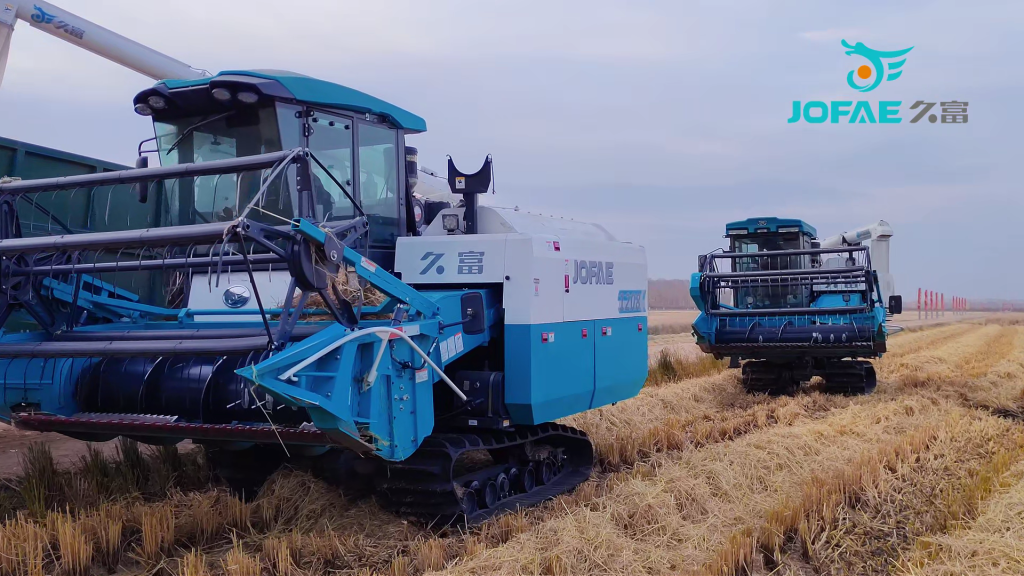
Understanding the different threshing systems is key to answering what is the best combine harvester for your farm:
| Technology | Brands | Pros | Cons |
| Single Rotor (Axial-Flow) | Case IH | Gentle on grain, simple design, excellent grain quality | May have lower peak throughput than twin-rotor systems |
| Twin Rotor | New Holland, John Deere (X9) | Maximum throughput, huge capacity | More complex, may be overkill for smaller operations |
| Hybrid (APS Synflow) | Claas | Balance of capacity and grain quality | Higher complexity |
| Straw Walker (Conventional) | Various | Gentle straw handling for baling | Lower capacity, declining in popularity |
The industry has seen a strong move towards rotary and hybrid models replacing traditional straw walker machines—except where gentle straw handling is the priority for baling.
The Most Powerful Combines in the World (2026)
For those who measure “best” by sheer power, here are the top models according to the latest ranking of combines above 300 HP:
| Rank | Model | Horsepower |
| 1 | Claas Lexion 8900 | 790 |
| 2 | Fendt Ideal 10T | 790 |
| 3 | Case IH AF11 | 775 |
| 4 | Case IH AF10 | 775 |
| 5 | New Holland CR11 | 775 |
| 6 | Claas Lexion 8800 | 653 |
| 10 | New Holland CR10 | 634 |
| 11 | Case IH AF9 | 634 |
| 13 | John Deere X9 1100 | 603 |
What Is the Best-Selling Combine Harvester?
While sales figures vary by region, Claas Lexion 8700 has historically sold in the largest numbers in markets like the UK. Globally, John Deere, CNH Industrial (Case IH and New Holland), Kubota, Claas, and AGCO are the key players. In some regional markets, brands like Weichai Lovol dominate—for example, Lovol sold 2,573 wheeled combines in a five-month period in 2025.
The best-selling model for you depends on your local market, dealer presence, and regional preferences.
How to Choose: A Decision Framework
Rather than asking which combine harvester is the best in absolute terms, ask these questions:
1. What’s your farm size?
- Small to medium farms: Consider Claas Trion 750/760, John Deere S4 (new for 2026 targeting mid-sized operations), or Massey Ferguson Activa series. For smaller plots, budget-conscious purchases, or farms requiring high manoeuvrability, the JF100H Full-feed Combine Harvester—a compact 100PS model—offers a reliable and cost-effective entry point for smaller-scale harvesting needs without compromising on basic threshing efficiency.
- Large farms: John Deere S7/X9, Case IH AF9/AF10, New Holland CR10/CR11, Claas Lexion 8600/8700/8900.
- Very large/contracting: Case IH AF11, New Holland CR11, Claas Lexion 8900, John Deere X9 1100.
2. What crops do you harvest?
- Cereals (wheat, barley, oats): All brands perform well; consider hybrid or rotary for higher throughput.
- Corn/maize: Rotary systems (Case IH, New Holland, John Deere X9) excel.
- Oilseeds (canola, soybeans): Single-rotor systems like Case IH provide gentler handling.
- Straw for baling: Conventional straw walker machines may be preferred.
3. What’s your technology preference?
- John Deere offers the most integrated precision ag ecosystem (Operations Center, Combine Advisor).
- Case IH includes many precision features subscription-free.
- Claas provides a five-year Connect license with Telematics and Remote Service.
4. What’s your dealer support like?
The best combine in the world is useless without parts and service. Dealer network strength varies by region—John Deere has an exceptionally strong network in North America, while Claas dominates in Europe.
5. Tire vs. Track?
Track systems (like Claas Terra-Trac) reduce soil compaction but cost more. Tires are more affordable and offer better road speed.
Conclusion: So, What Is the Best Combine Harvester?
After reviewing the 2026 lineup, here’s the bottom line:
- If you want the most powerful combine: The Claas Lexion 8900 (790 hp) holds the crown.
- If you want the largest single-rotor combine: The Case IH AF10 is unmatched.
- If you want maximum throughput for large-scale operations: The New Holland CR11 delivers spot rates up to 140t/hour.
- If you want cutting-edge automation and precision: The John Deere X9 1100 or S7 Series lead the way.
- If you want European engineering and exceptional reliability: Claas is the answer.
Ultimately, who makes the best combine harvester depends on your farm, your crops, and your priorities. The good news is that in 2026, all major manufacturers offer world-class machines. Visit your local dealers, test-drive the models that fit your operation, and choose the combine that will keep you harvesting efficiently for years to come.