
If you have ever watched a modern harvest, you have seen a single machine sweep across a field, cutting, threshing, and cleaning grain in one pass. That machine is the combine harvester, and its invention ranks among the most important milestones in agriculture. But the question that often arises is: when was the combine harvester invented? The answer is not a single year, but rather a story that stretches over decades, with several key breakthroughs that together created the powerful equipment we use today.
To truly understand when was the combine harvester invented, we must first look at the early attempts to mechanise harvesting. Before the combine, farmers used separate tools – a reaper to cut grain, a thresher to separate kernels, and a winnower to clean them. Each step required heavy manual labour and dozens of workers. The idea of combining all three operations into one machine was revolutionary, but it took visionaries on both sides of the Atlantic to make it real.
Early Precursors – The Reapers That Paved the Way
Long before anyone asked when was the combine harvester invented, inventors were tinkering with mechanical reapers. In 1826, a Scottish minister named Patrick Bell designed a horse‑drawn reaping machine that used a scissors‑like cutting action. Although Bell never patented his design, his machine inspired later developments. Meanwhile, in the United States, Cyrus McCormick patented a mechanical reaper in 1834, which became commercially successful. Yet neither Bell nor McCormick produced a true combine – they only handled the cutting, not the threshing and cleaning. The real answer to when was the combine harvester invented lies a little later and across the Atlantic.
The First True Combine Harvester – The Answer Revealed
So, when was the combine harvester invented in its full sense? The credit goes to Hiram Moore, a farmer and inventor from Michigan, who built and patented the first practical combine harvester in 1834 (some sources say 1835 or 1836). Moore’s machine was enormous – 17 feet long with a 15‑foot cutting width – and required as many as 30 horses or mules to pull it. It could harvest, thresh, and clean grain in a single operation, exactly what we now call a combine. In 1839, one of his machines harvested over 50 acres of wheat in a single day, a feat that stunned neighbouring farmers.
Now that we know when was the combine harvester invented, the next logical question is where was the combine harvester invented? The birthplace is Kalamazoo County, Michigan, USA, where Moore and his financier John Hascall built and tested their prototypes. Although Patrick Bell’s reaper came earlier in Scotland, the first machine that combined all three harvesting functions was undeniably American.
And who invented the first combine harvester? That was Hiram Moore, together with John Hascall, who filed a patent in 1836. Moore’s design was remarkably advanced, featuring a revolving reel, a cutter bar, and a threshing cylinder, all mounted on a large wooden frame. His invention laid the foundation for every combine that followed.
From Invention to Commercial Production – Who Made the First Marketable Combine?
Knowing when was the combine harvester invented is only half the story; the machine had to become commercially viable. So, who made the first combine harvester that farmers could actually buy? While Moore’s prototypes were experimental, the first commercially successful combine harvester was built in Australia by a young inventor named Hugh Victor McKay. In 1882, at the age of 20, McKay began assembling parts in his father’s workshop, and by 1885 he had produced the “Sunshine Header Harvester”, which sold across Australia and later worldwide. Around the same time, American companies like Daniel Best and Holt Brothers also started manufacturing horse‑drawn combines in California. These early commercial models finally brought the invention to ordinary farms, proving that the answer to when was the combine harvester invented was only the beginning of a long evolution.
The Self‑Propelled Revolution – Who Invented the Self‑Propelled Combine Harvester?
For decades, combines were pulled by horses, mules, or steam tractors. Then came the question: who invented the self propelled combine harvester? The technical first was George Stockton Berry, a California farmer who in 1886 built and operated a self‑propelled combine using a steam engine. He received a patent in 1887 for his design, which included many features still seen today. However, Berry’s machine was not commercially successful.
The title of who invented the self propelled combine harvester that truly changed the industry belongs to Massey‑Harris. In 1938, the company introduced the MH‑20, widely regarded as the first commercially successful self‑propelled combine. Developed under the leadership of Australian engineer Tom Carroll, the MH‑20 was lighter, more manoeuvrable, and much more efficient than towed models. It also popularised the term “combine harvester” itself. By 1939, the first production units were sent to Argentina for field trials, and soon afterwards they revolutionised farming across the Americas. This leap answered not only who invented the self propelled combine harvester but also showed how far the technology had come since Moore’s horse‑drawn behemoth.
Why Was the Combine Harvester Invented? The Driving Forces
Beyond the dates and names, we must ask why was the combine harvester invented? The answer lies in the urgent need for labour efficiency. In the 19th century, harvesting grain required enormous crews – up to 30 men for threshing alone. As farms expanded across the American prairie and Australian outback, finding enough hands became nearly impossible. A combine could do the work of a dozen men with only a few operators, cutting costs and saving time. Additionally, the Civil War and later World Wars drained rural labour forces, accelerating the push for mechanisation. The economic advantage was undeniable: mechanical harvesting reduced the cost of wheat production by more than half. So, why was the combine harvester invented? To feed a growing population with fewer workers, and to make farming profitable on a massive scale.
The Spread and Evolution of the Combine Harvester
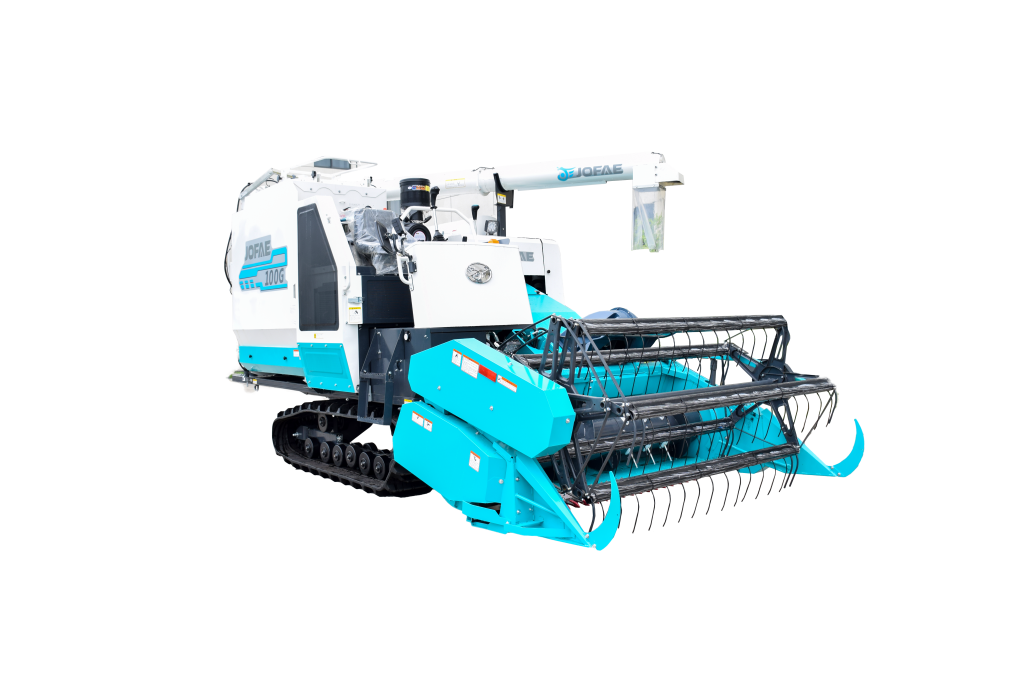
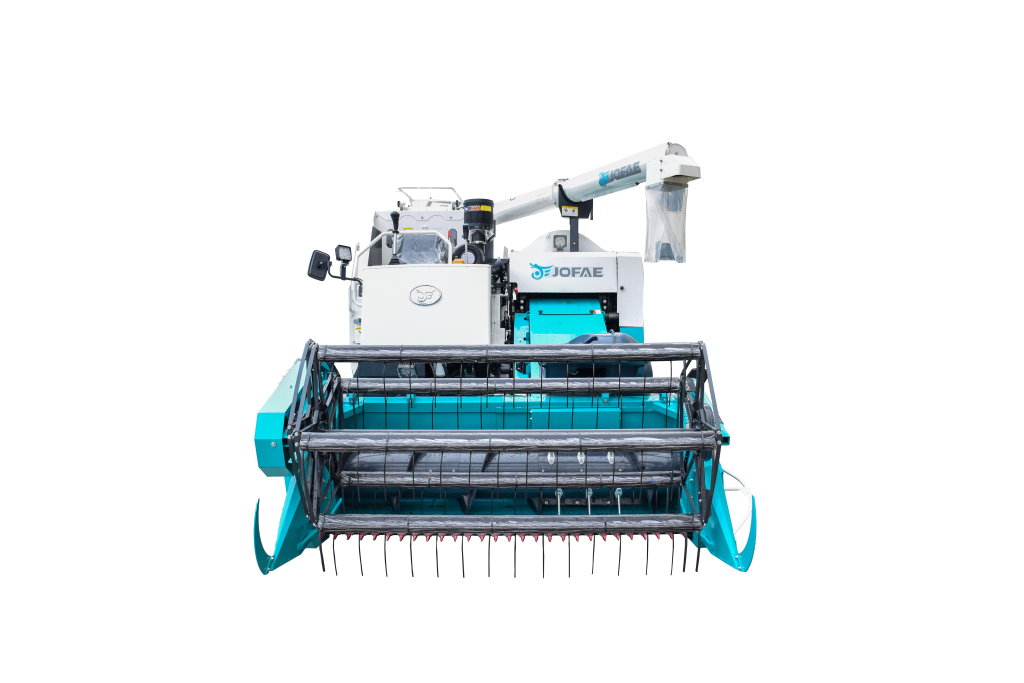
After we established when was the combine harvester invented, the technology gradually spread. In the 1860s, combines started appearing on large American farms, but adoption was slow due to their size and cost. The introduction of the tractor‑drawn combine by International Harvester in 1915 made the machine more accessible, and by 1930, there were about 75,000 combines in the United States. The self‑propelled models of the 1940s, such as John Deere’s Model 55 (1947), further boosted popularity. Today, combines are equipped with GPS, yield monitors, and automated controls, making them the pinnacle of precision agriculture. Modern machines, like the JF100G Full‑feed Combine Harvester, incorporate advanced full‑feed threshing systems that handle a wide variety of crops with minimal grain loss. These innovations are direct descendants of Moore’s original vision, and they continue to improve harvest efficiency worldwide.
Conclusion – The Legacy of an Invention
So, when was the combine harvester invented? The definitive answer is 1834, when Hiram Moore built his first working model in Michigan. Yet the story does not end there – from Moore’s horse‑drawn contraption to McKay’s commercial successes, from Berry’s steam‑powered self‑propelled machine to Massey‑Harris’s game‑changing MH‑20, each milestone built upon the last. The question when was the combine harvester invented opens the door to a century of ingenuity, and the reasons why was the combine harvester invented remain as relevant as ever. Today, this remarkable machine allows a handful of farmers to feed entire nations, and with continuous advancements like the JF100G Full‑feed Combine Harvester, the legacy of that original invention lives on. Whether you are a farmer, a historian, or simply curious, understanding this timeline gives you a profound appreciation for the machinery that sustains our world.